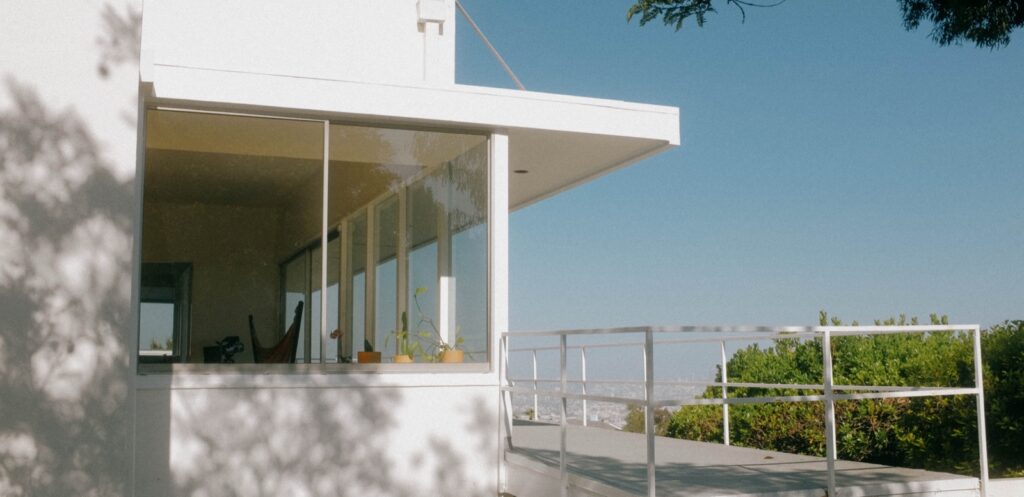
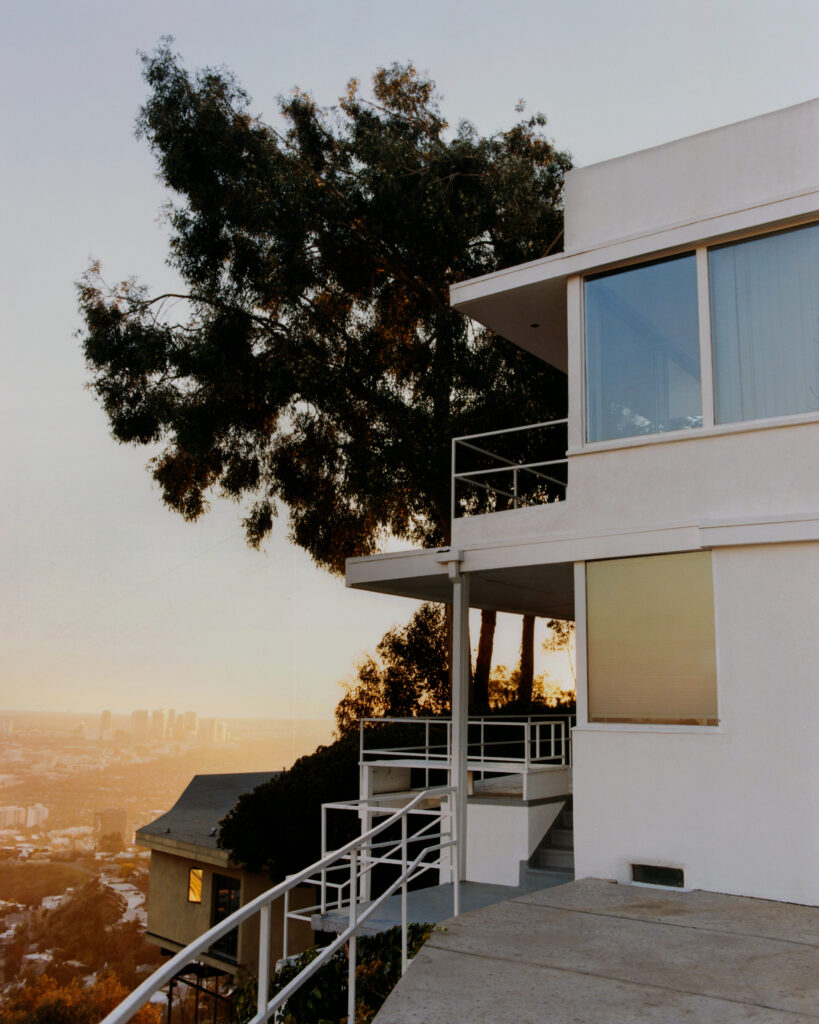
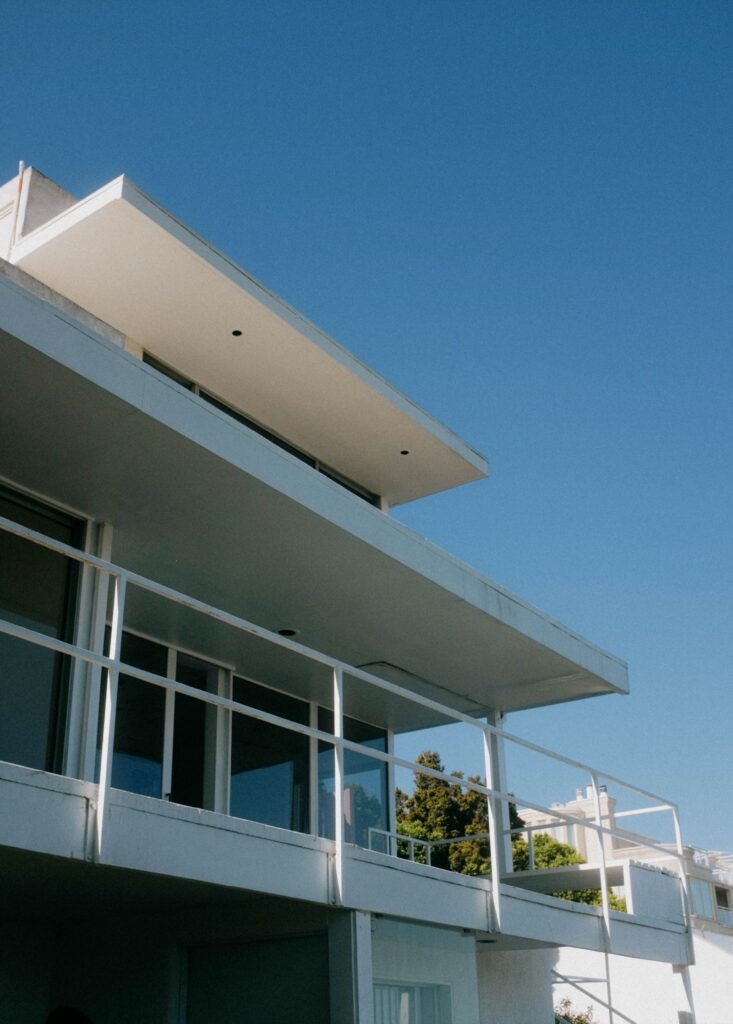
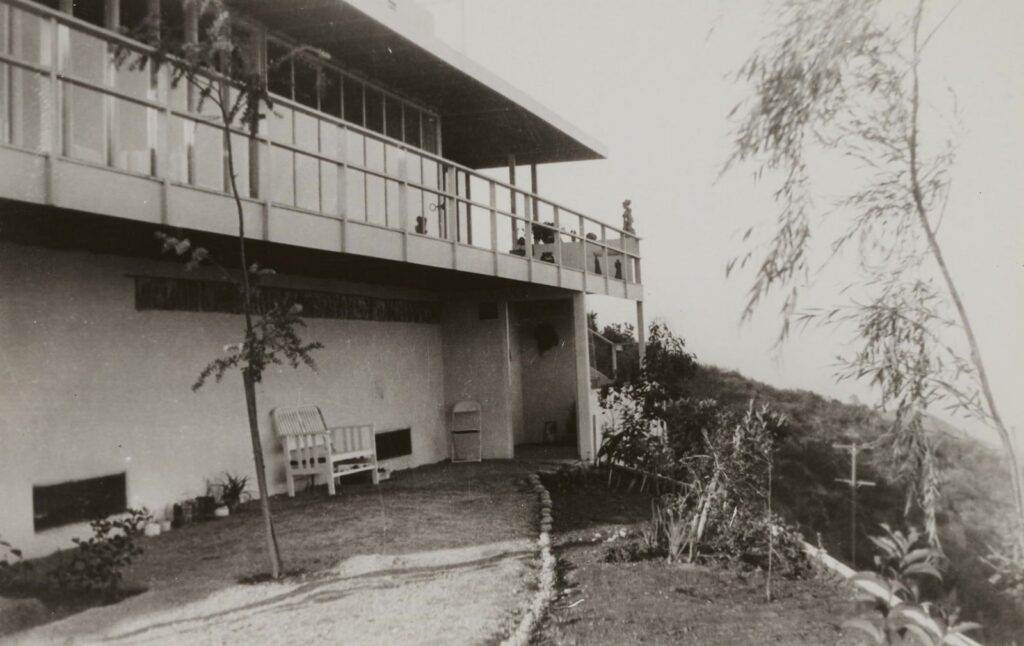
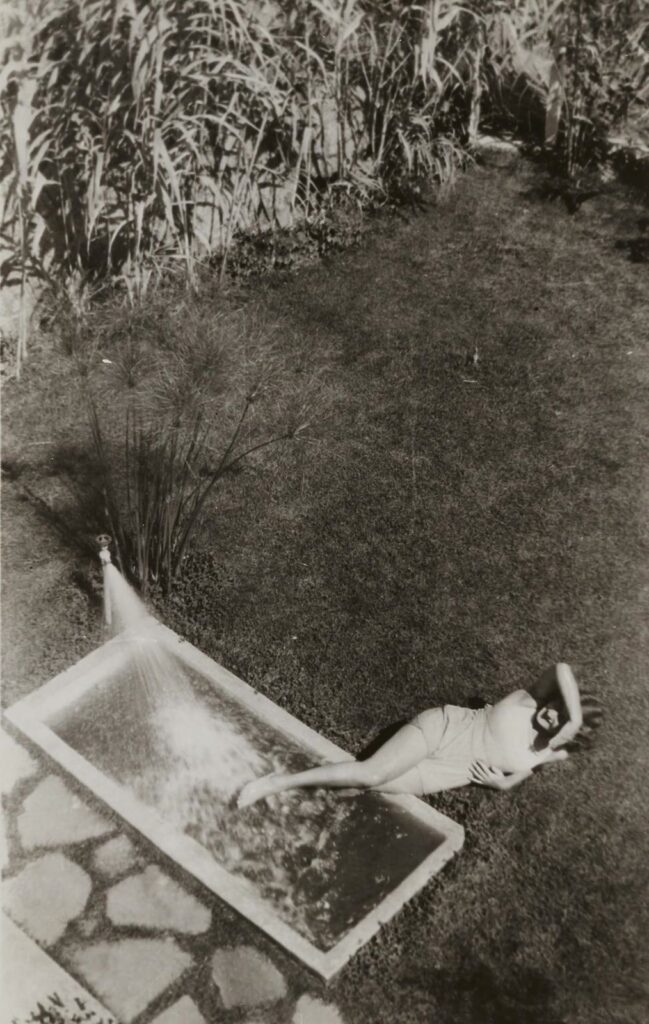
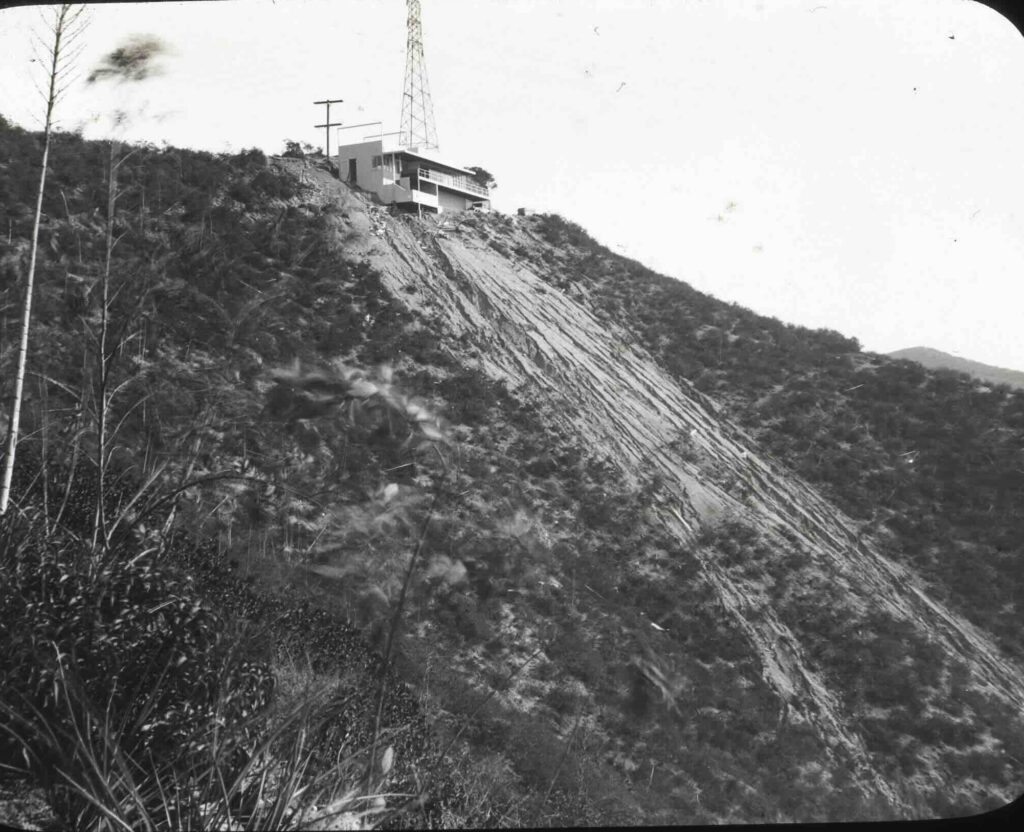
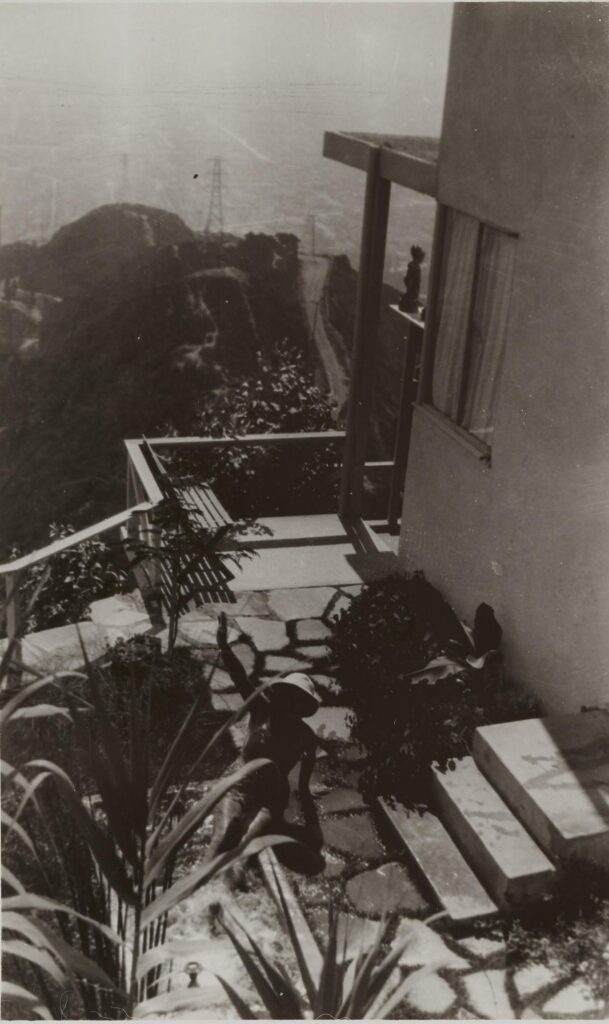
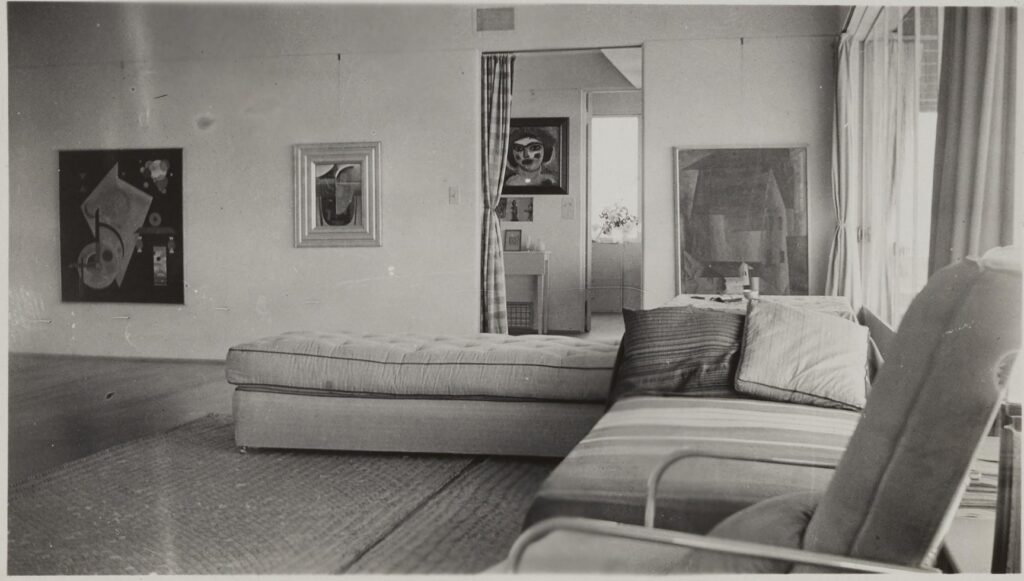
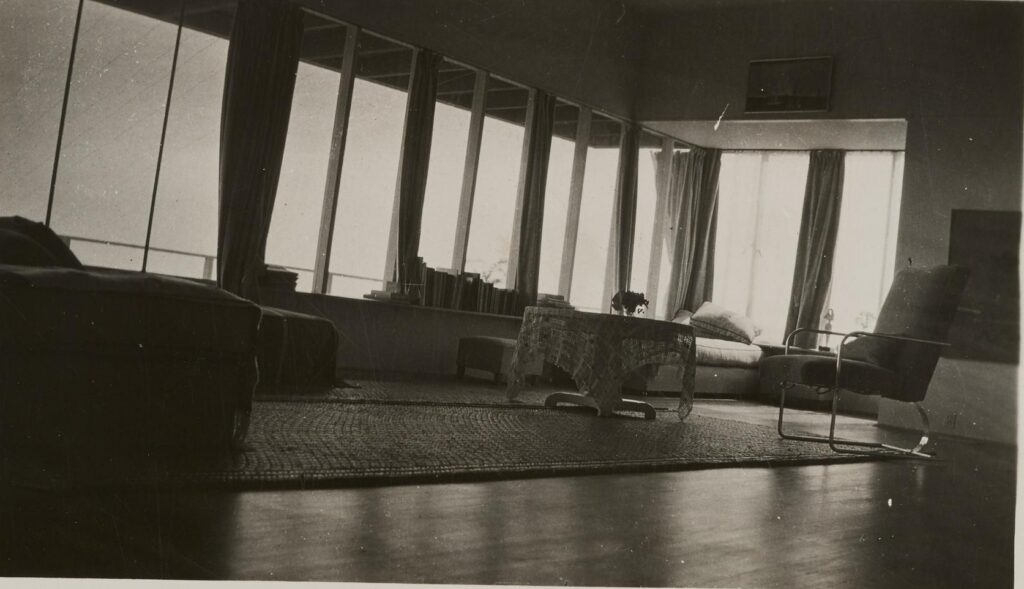
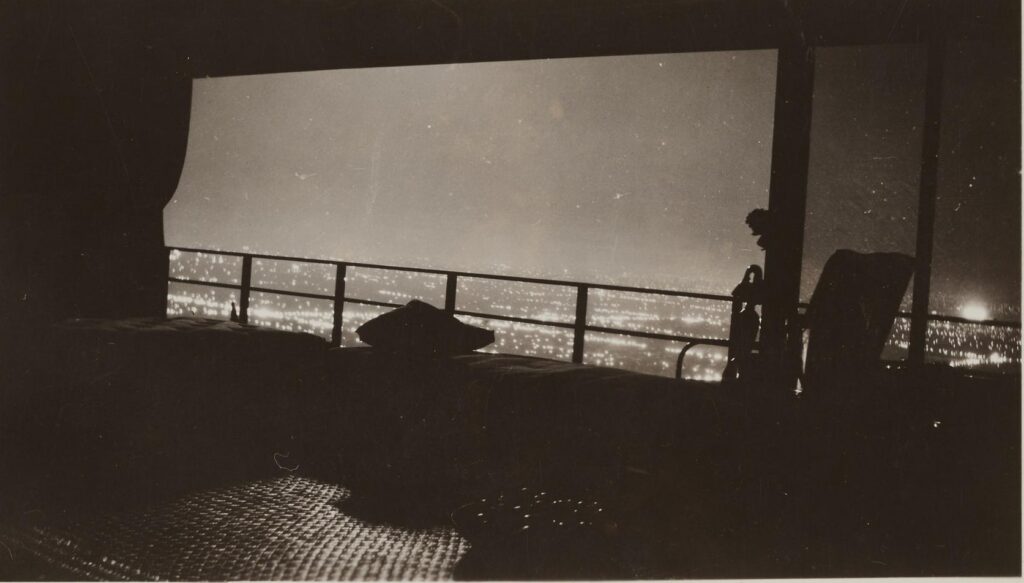
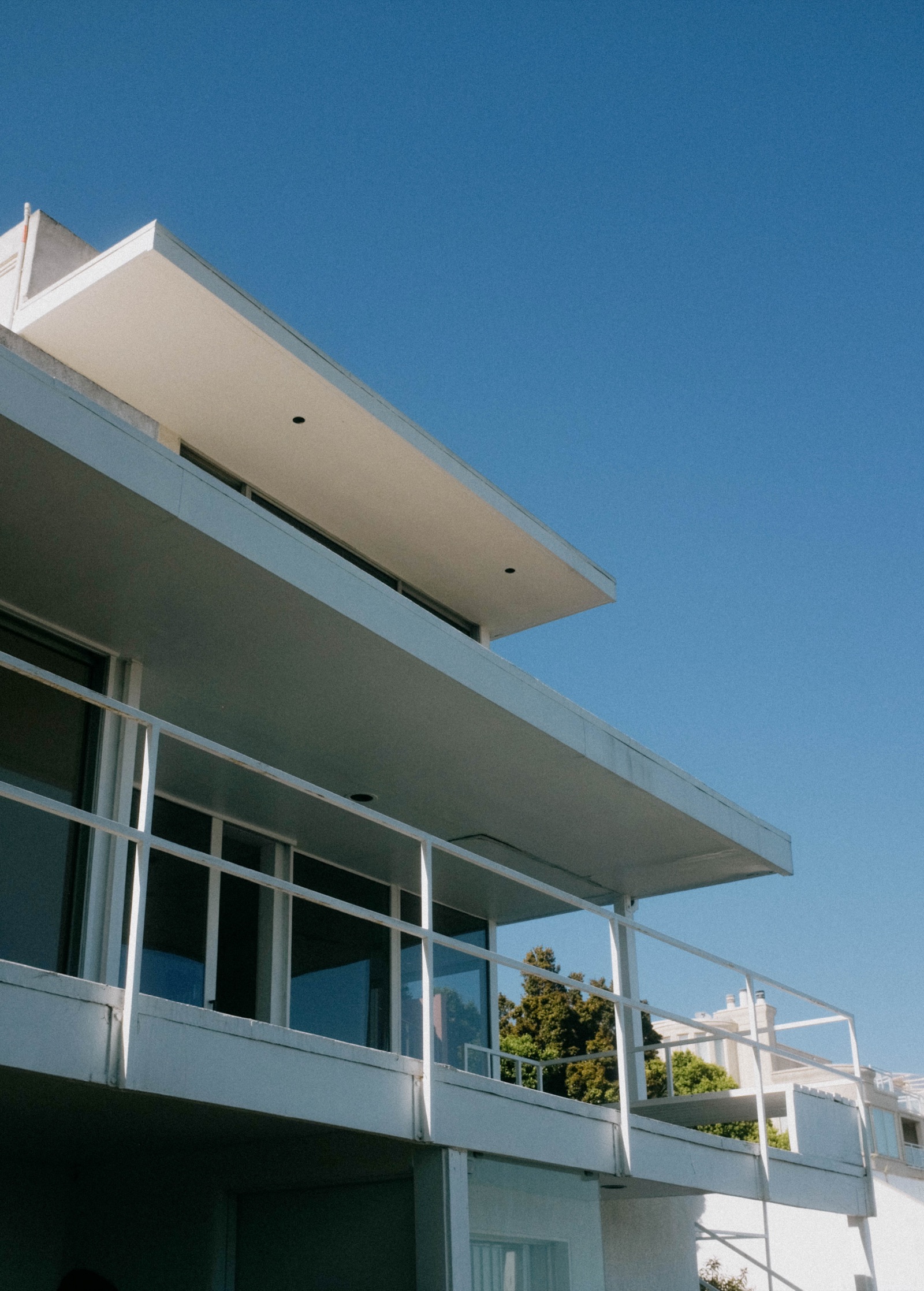
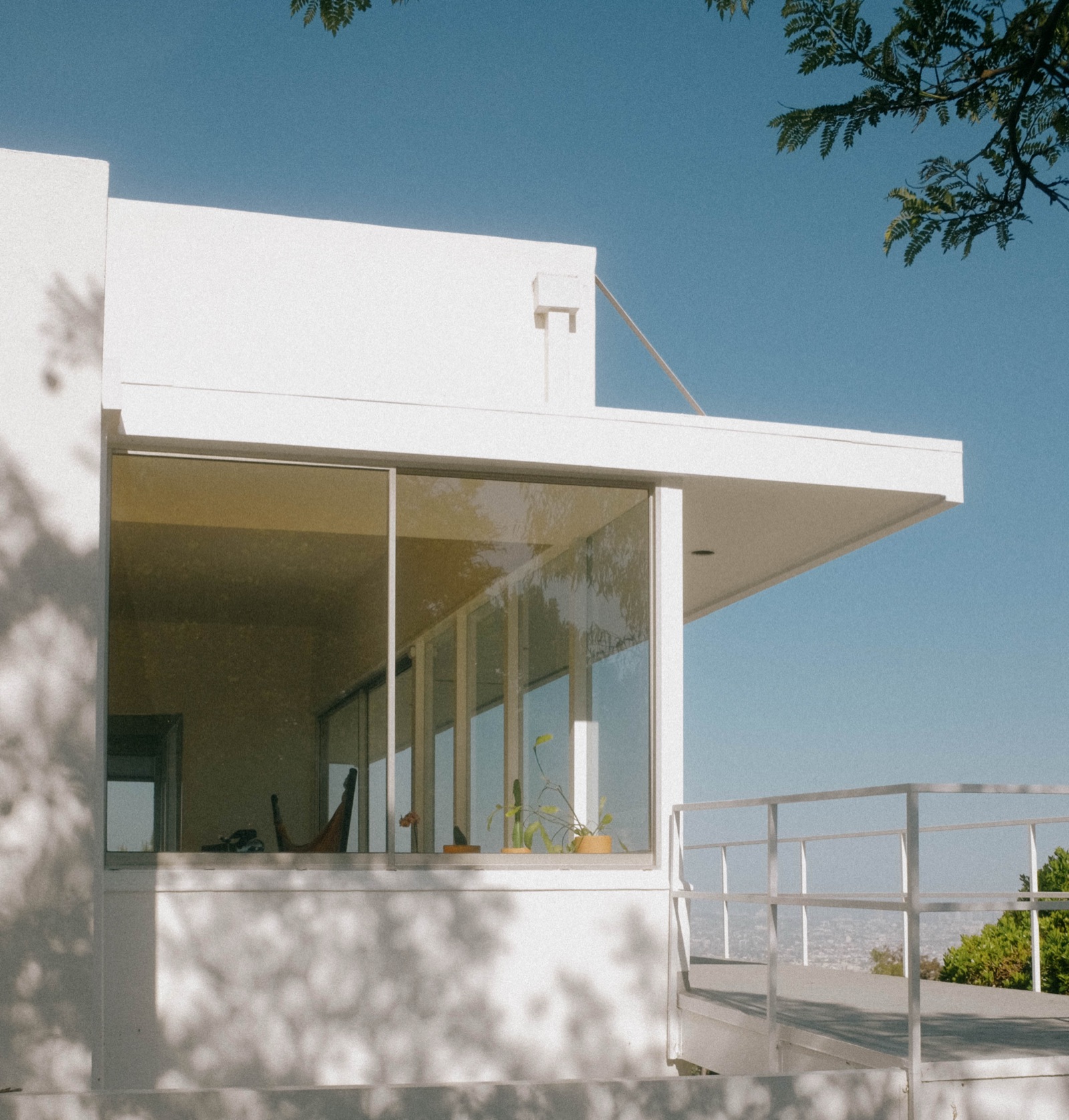
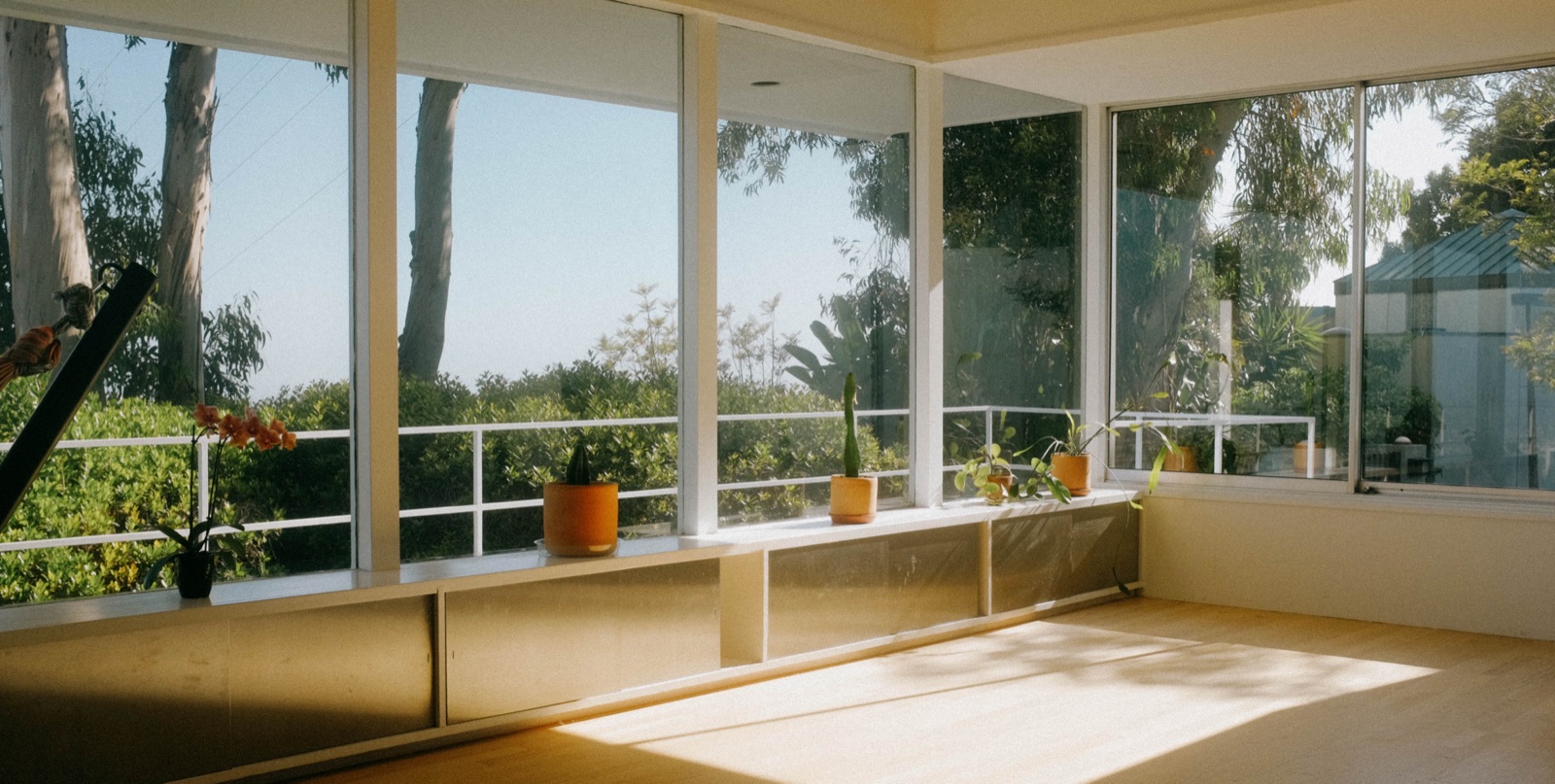
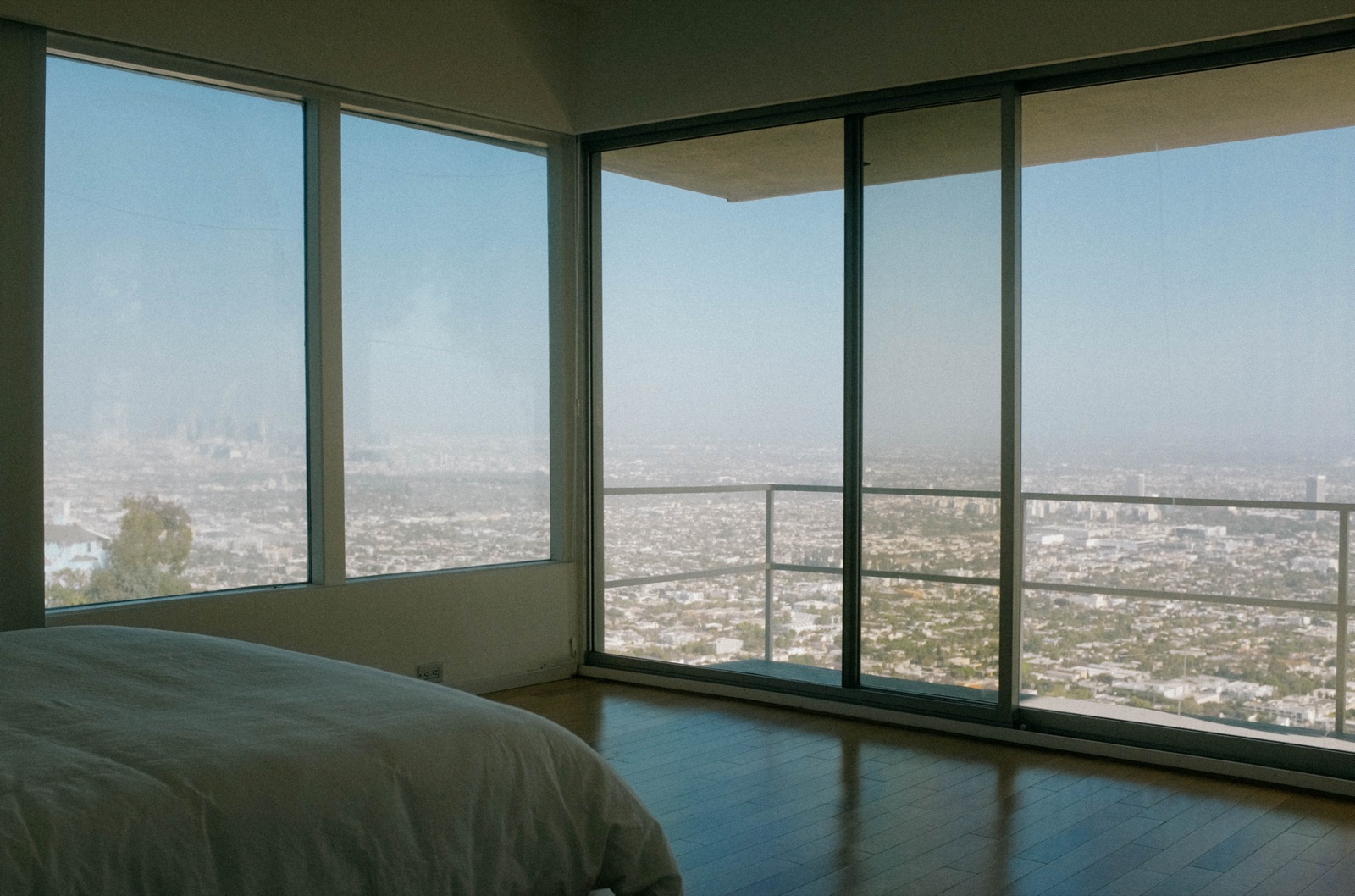
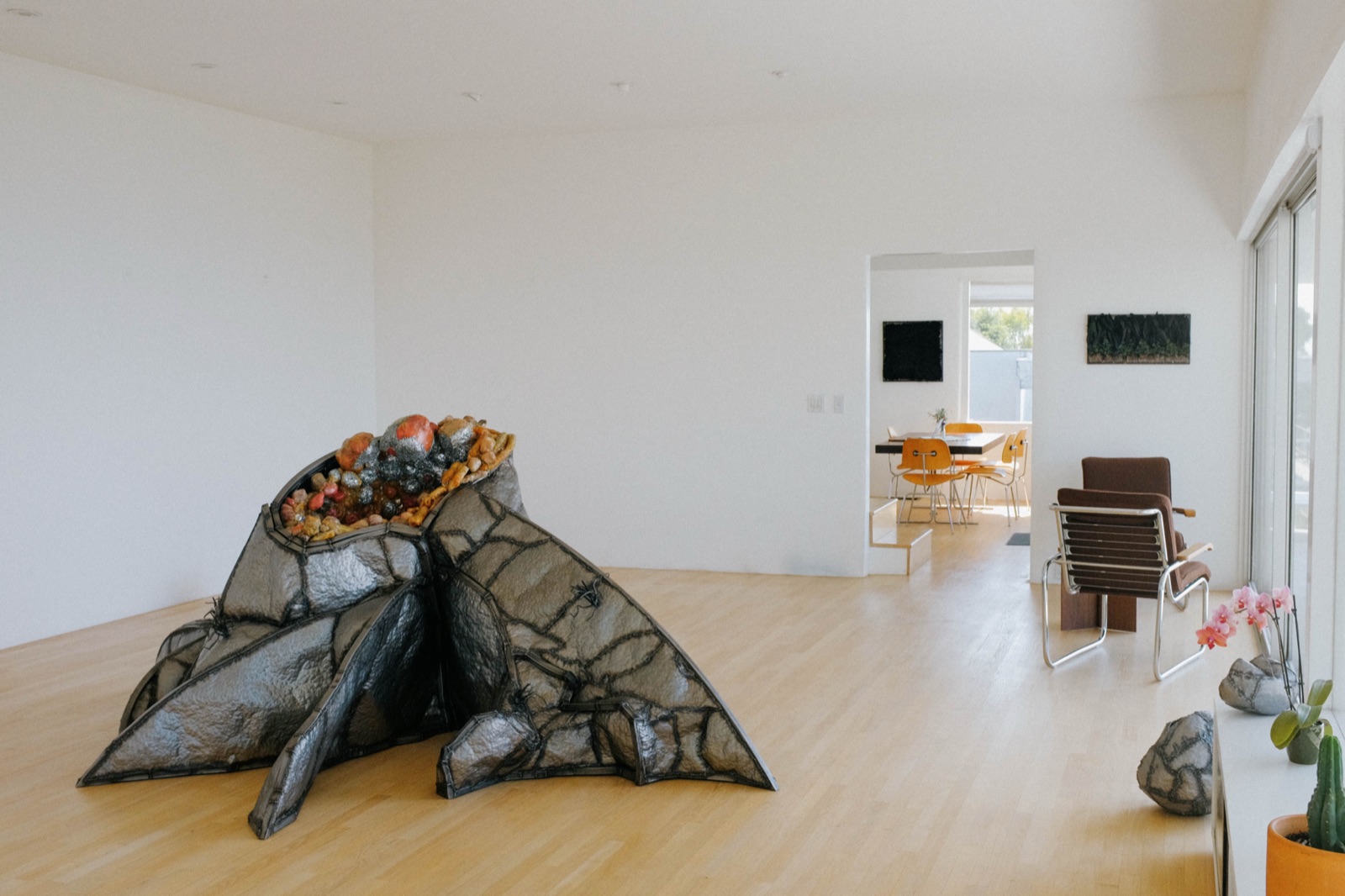
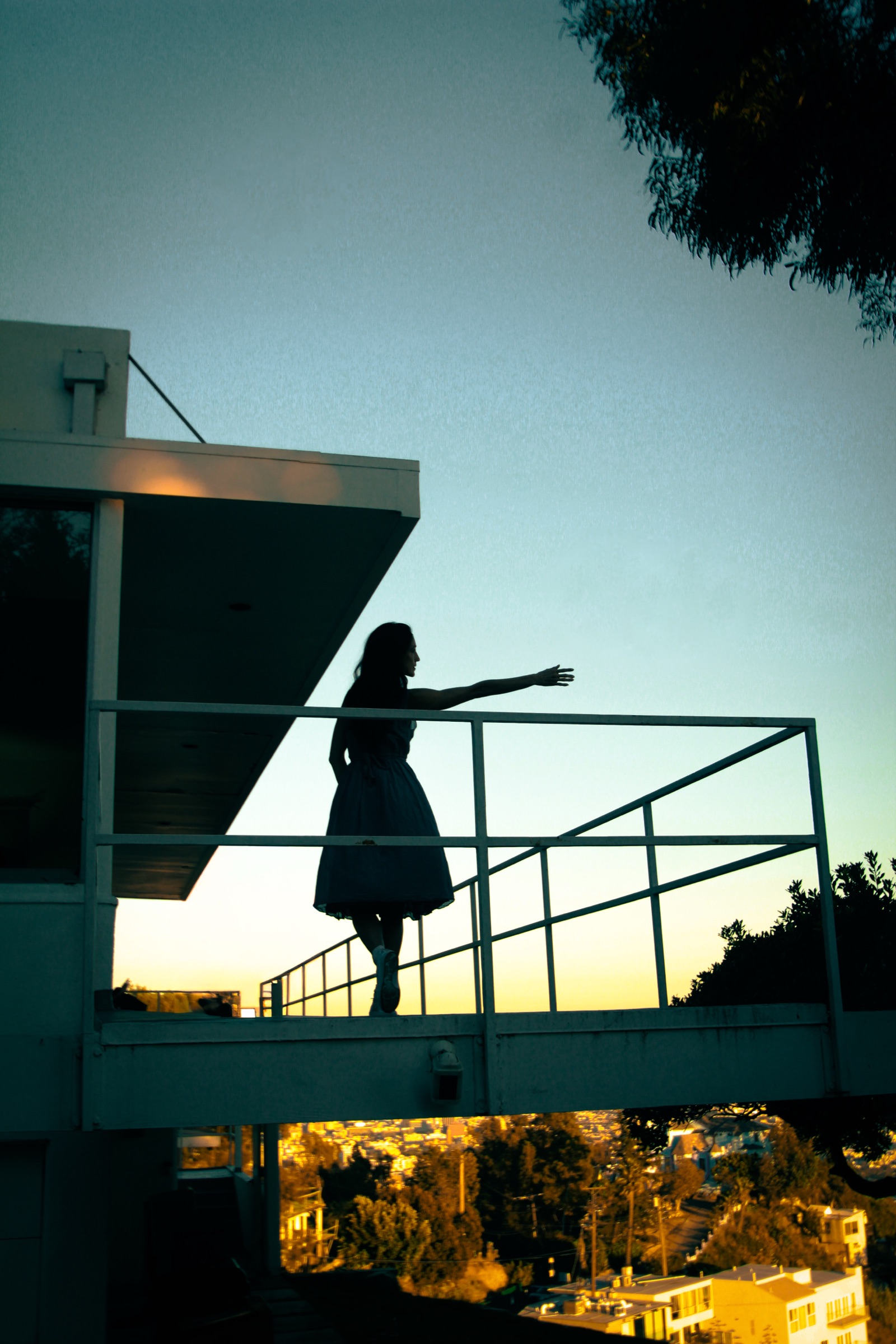
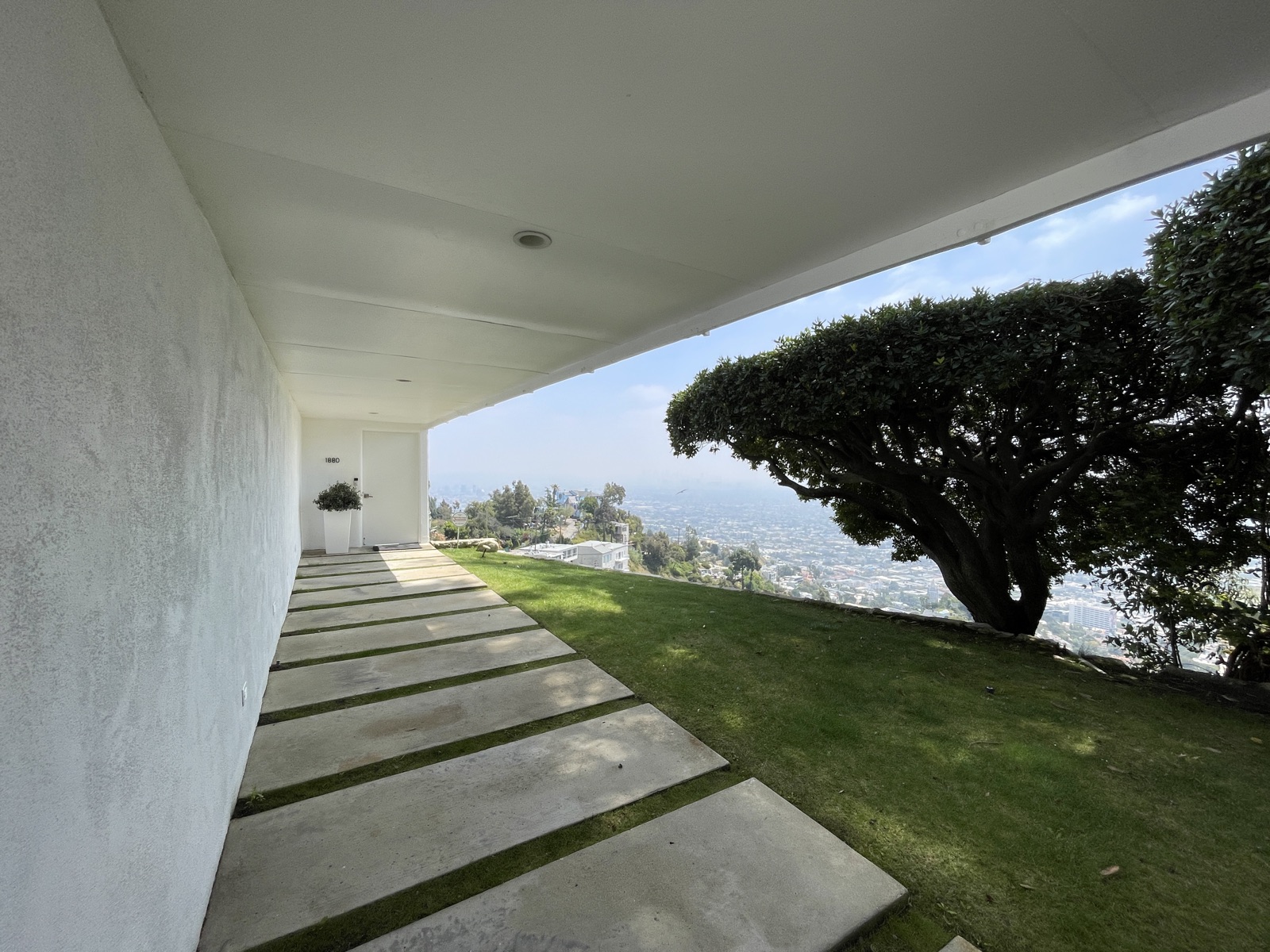
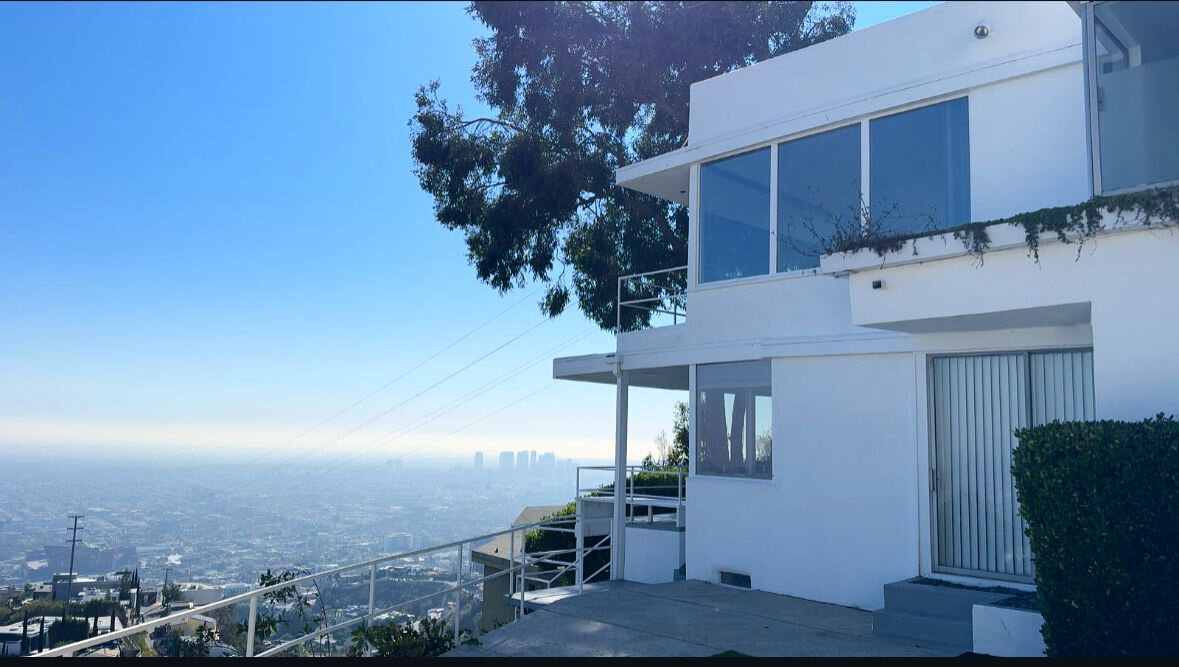
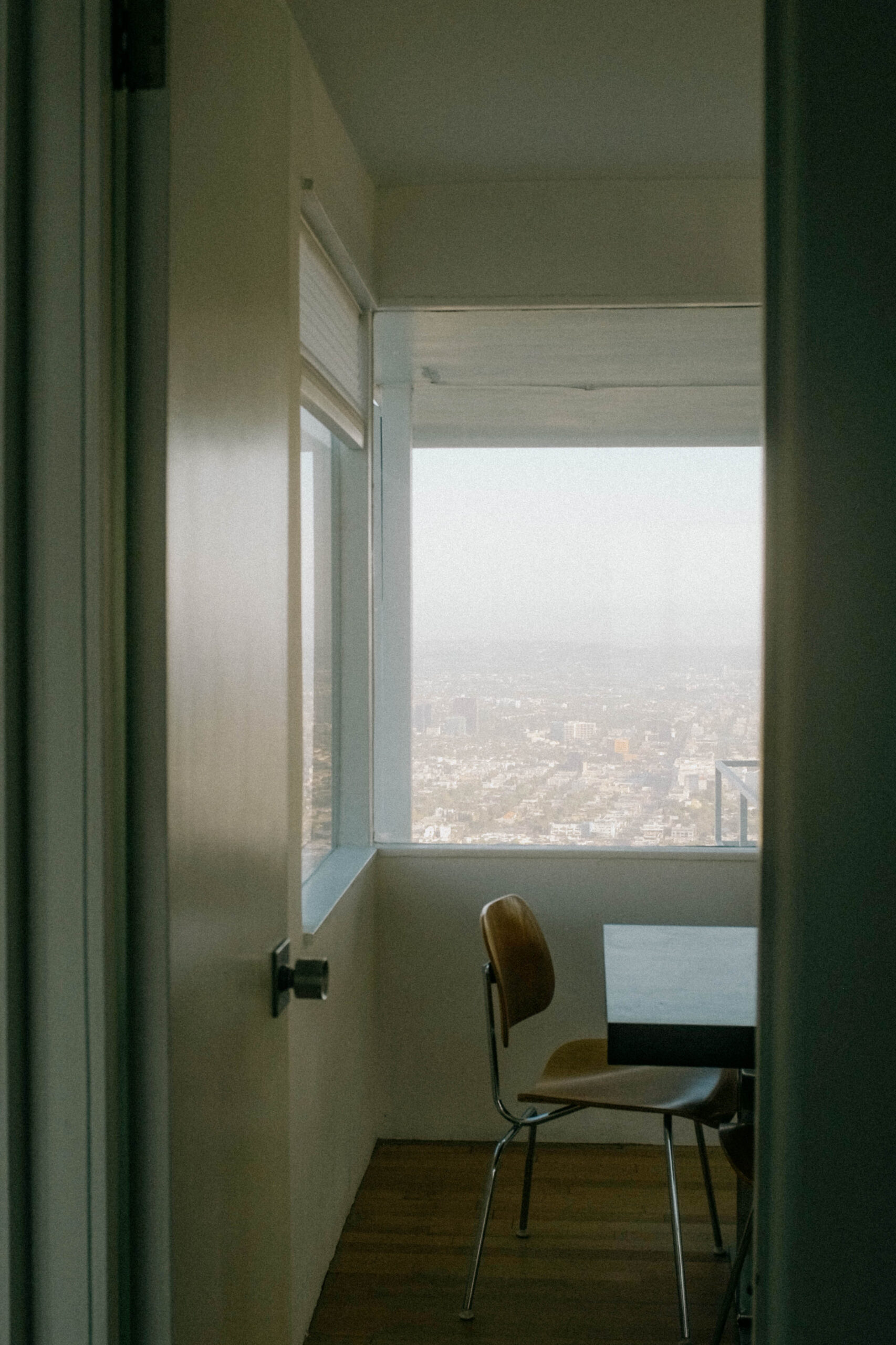
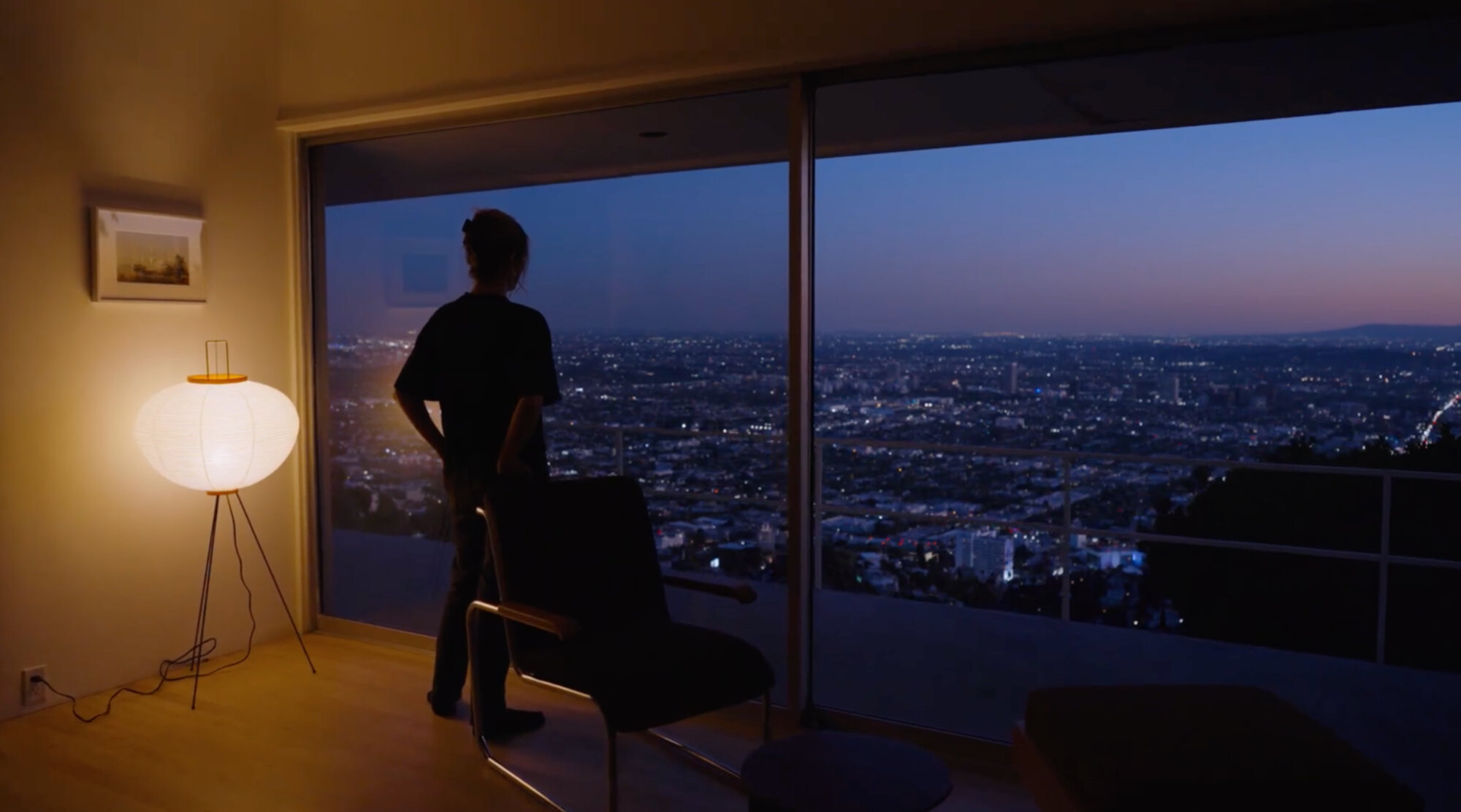
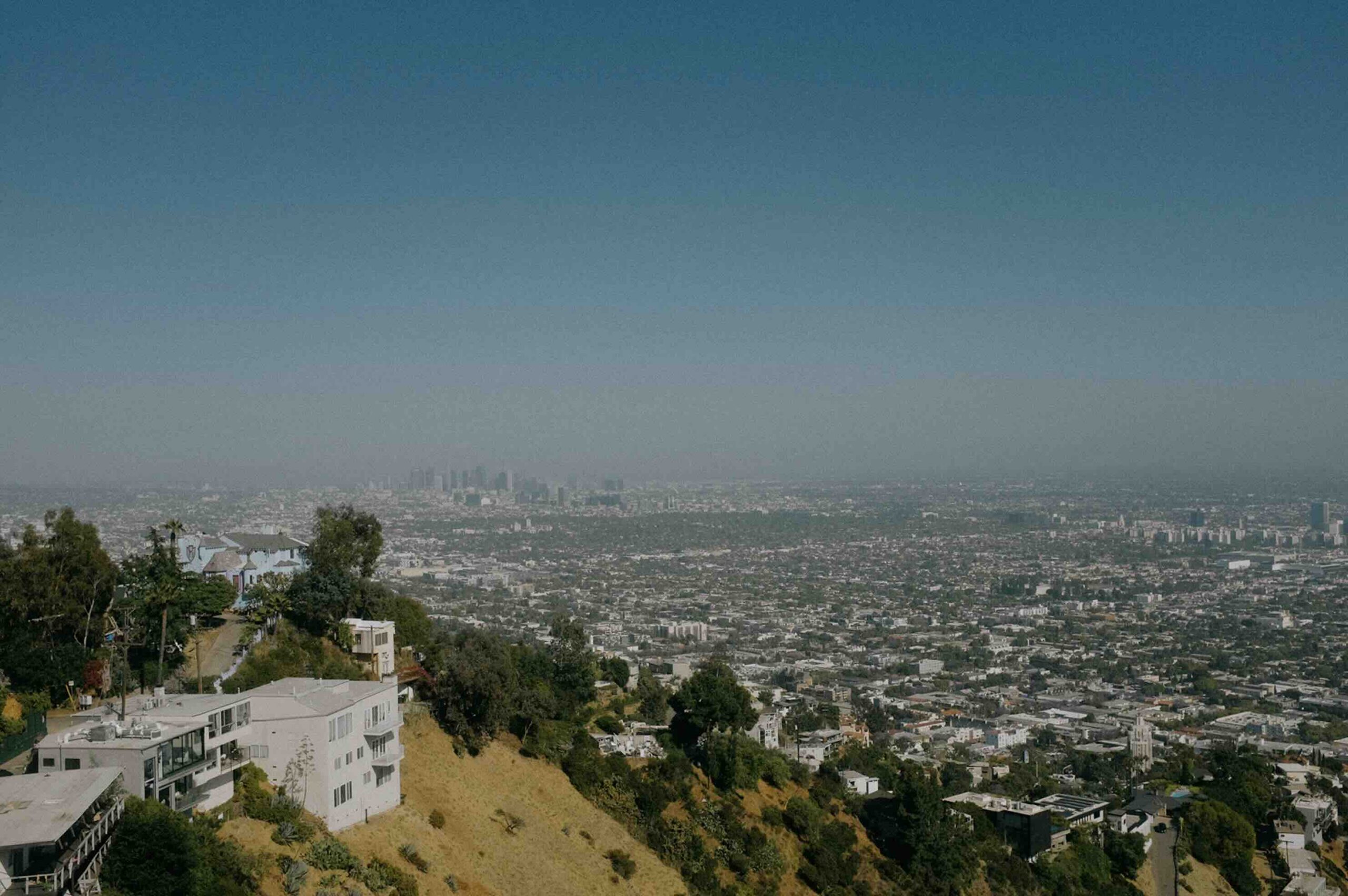
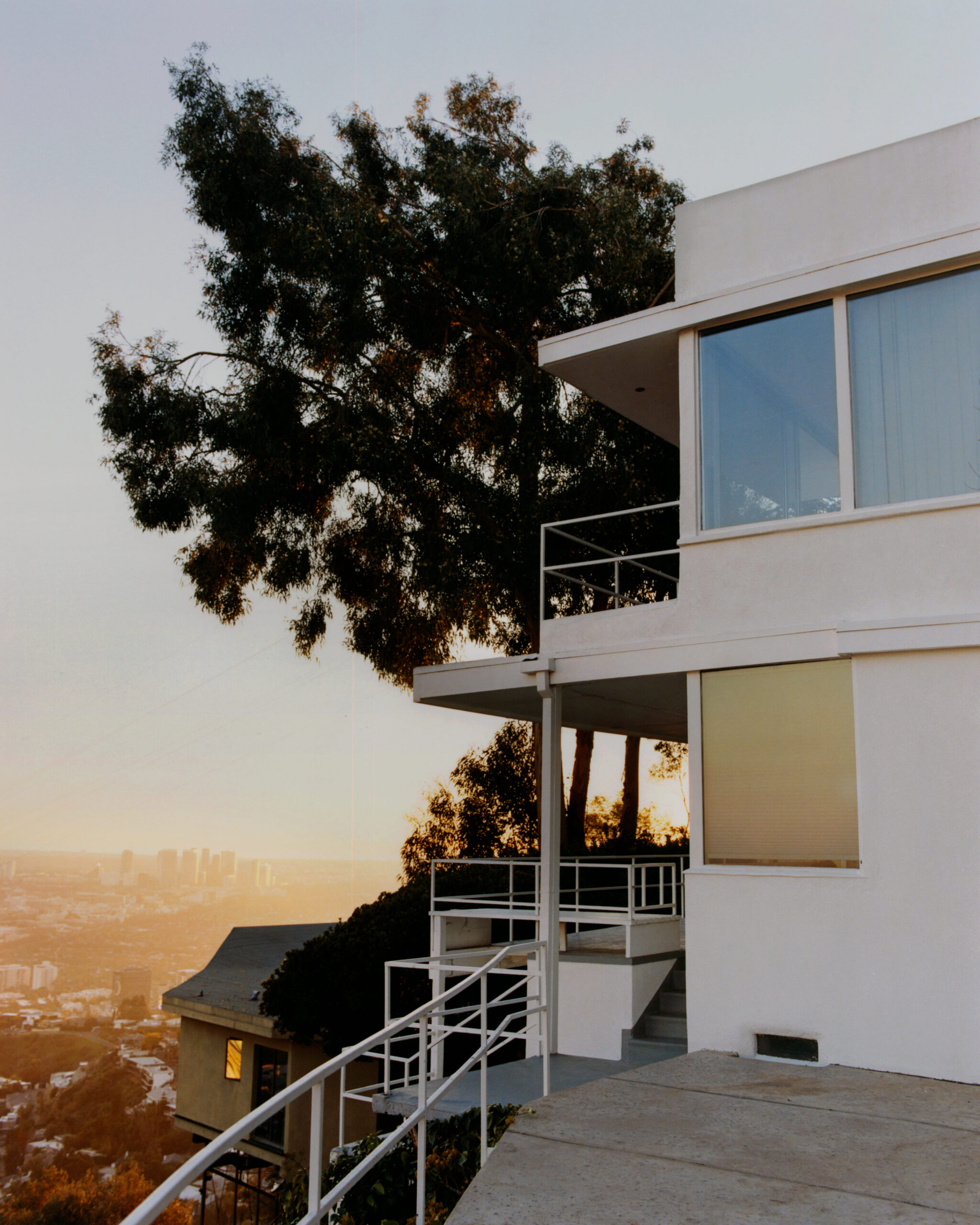
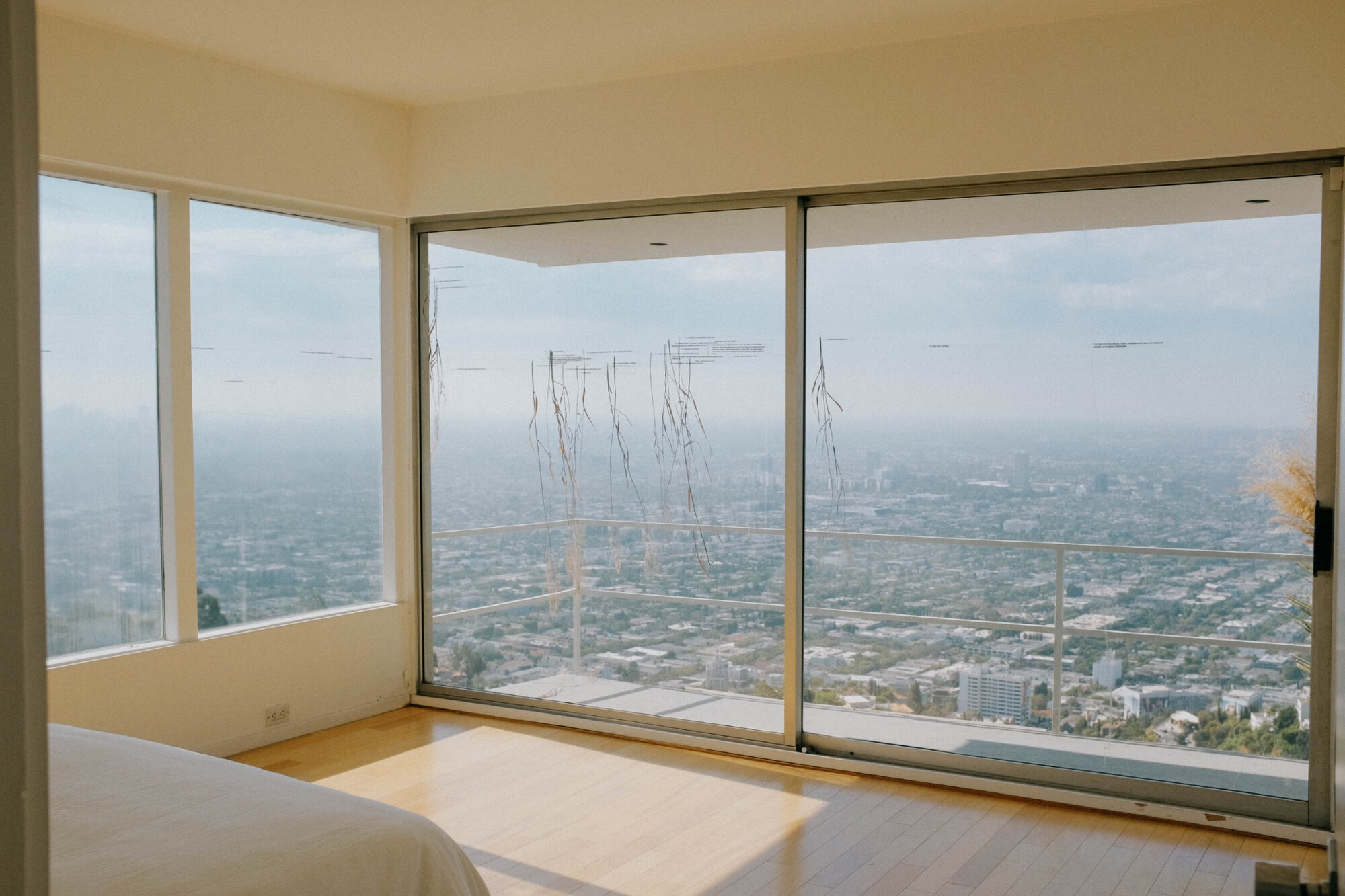
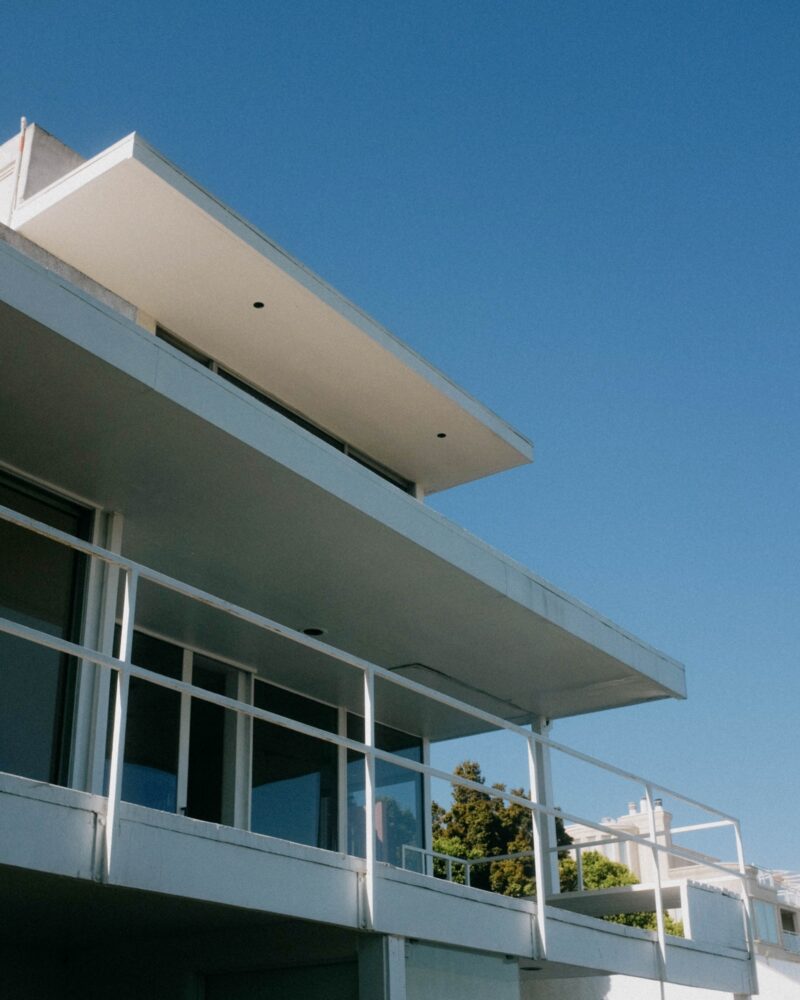
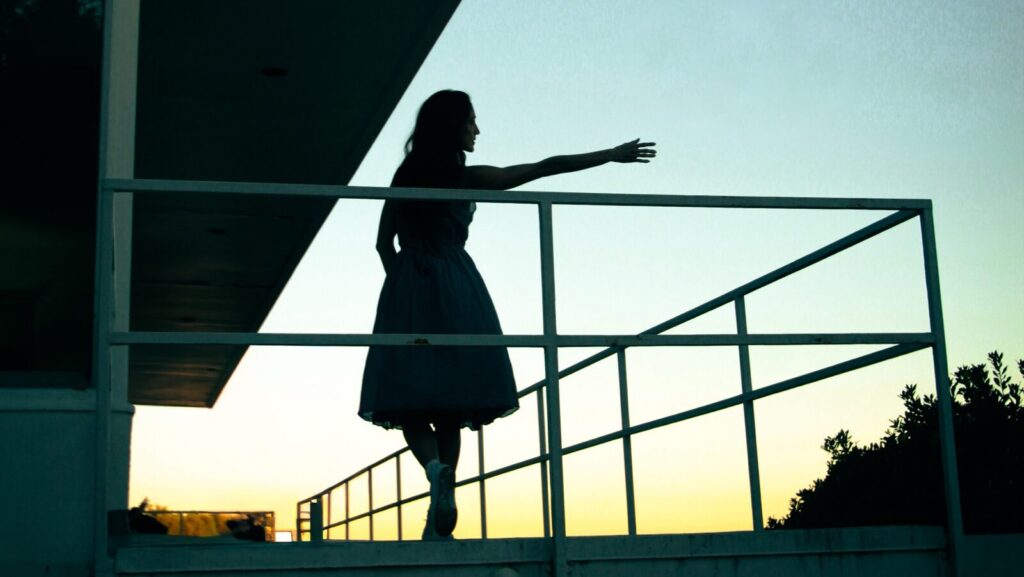
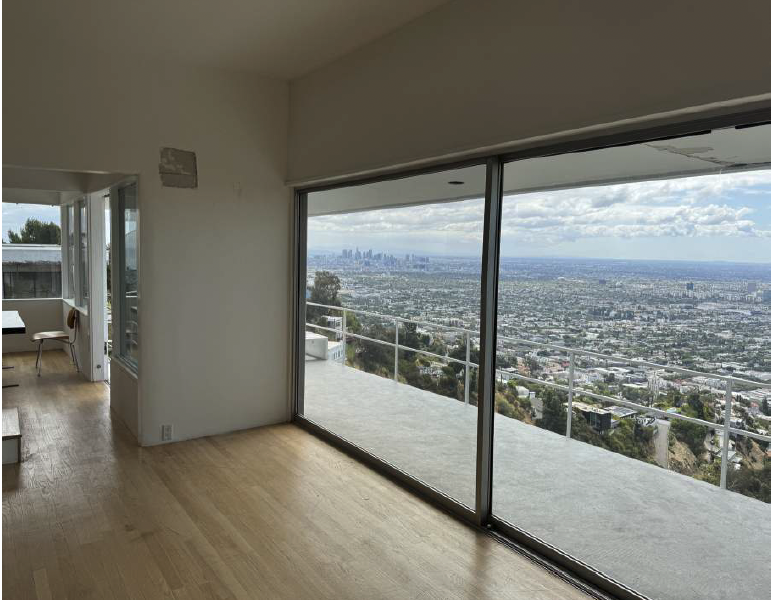
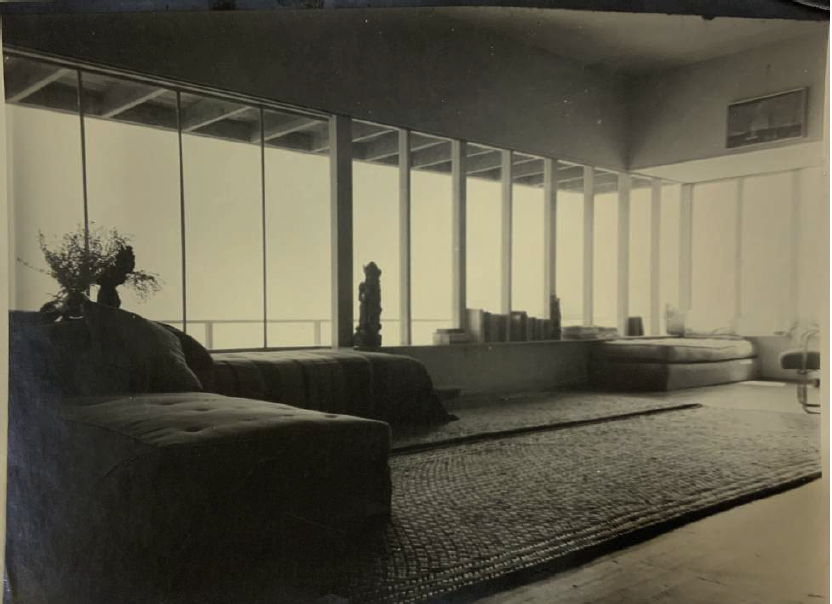
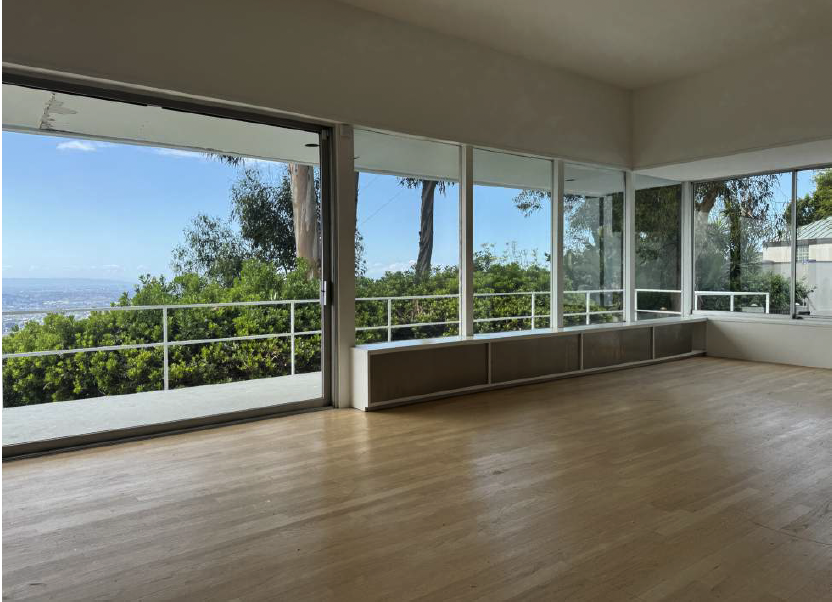
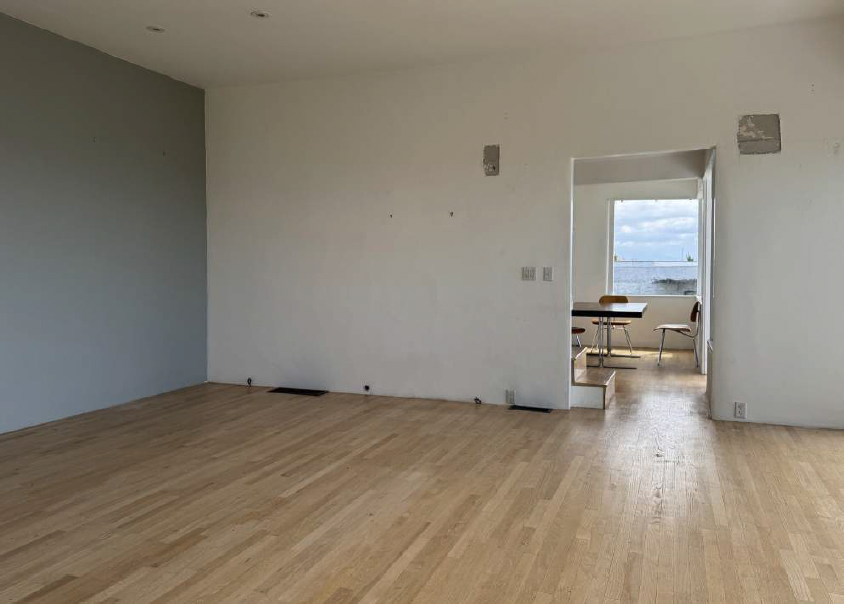
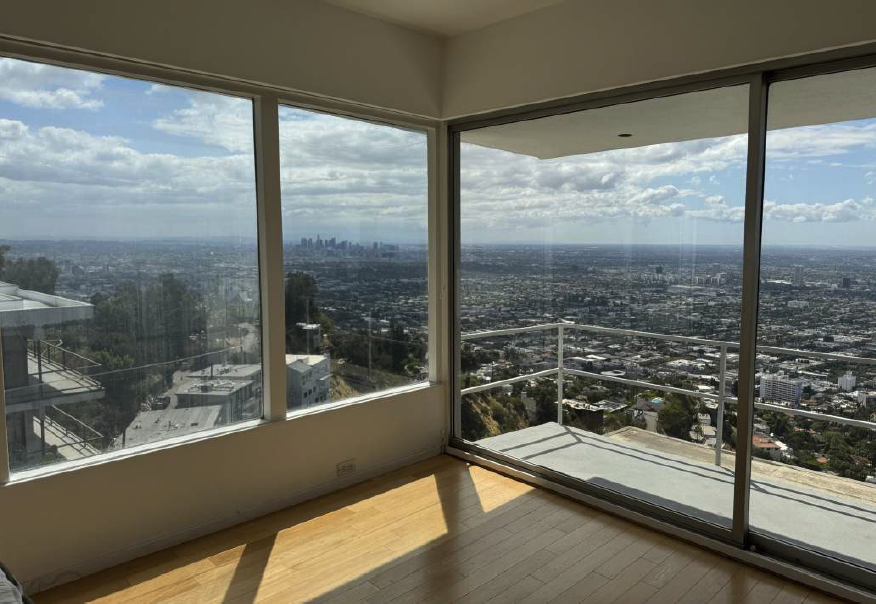
The Galka Scheyer House — Richard Neutra’s 1934 landmark in the Hollywood Hills, restored as a site for artists-in-residence, special exhibitions, and cultural exchange.
Photo: Jack Bool
A Shelter for Art and Ideas
Inspired by Galka Scheyer’s legacy and vision of a gallery house above the clouds, Blue Heights Arts & Culture reactivates the historic house as a space for art and artists, connecting its unique history to contemporary art and scholarship.
Galka Scheyer (1889–1945) was a champion of European modernism, art educator, and tireless promoter of “The Blue Four,” consisting of Lyonel Feininger, Alexej von Jawlensky, Wassily Kandinsky, and Paul Klee. She commissioned renowned architect Richard Neutra to design a gallery house in the Hollywood Hills. It became a gathering place for some of the era’s most progressive artists and a refuge for the German-speaking exile community in Los Angeles.
Renowned architectural firm Escher GuneWardena Architecture was commissioned with the restoration and remodeling of the Galka Scheyer House. In June 2026, the house was added to SurveyLA, the City of Los Angeles’s historic resources survey, and to HistoricPlacesLA, an online inventory of historic resources. The restoration of the Galka Scheyer House is projected to continue through summer 2027.
The Galka Scheyer House is not open to the public. Please contact us for tour inquiries.
Documentary Film In Blue Heights: Galka Scheyer in Los Angeles
Currently in development: A documentary film by Doris Berger & Benno Herz — A layered portrait of Galka Scheyer, her activities and networks in the U.S., and the restoration of her house, weaving together archival material, historic footage, expert interviews, and contemporary impressions. Learn more here.
Restoration
Renowned architectural firm Escher GuneWardena Architecture was commissioned with the restoration and remodeling of the Galka Scheyer House. In June 2026, the house was added to SurveyLA, the City of Los Angeles's historic resources survey, and to HistoricPlacesLA, an online inventory of historic resources. The restoration of the Galka Scheyer House is projected to continue through summer 2027. You can learn more about the ongoing restoration project here.
Past Programs & Exhibitions
Learn more and watch some of our past programs since 2024 here.
A Documentary Film by Doris Berger & Benno Herz — A layered portrait of Galka Scheyer, her activities and networks in the U.S., and the resoration of her house, weaving together archival material, historic footage, expert interviews and contemporary impressions.
A fellowship for poet Saskia Warzecha at the Scheyer House, in collaboration with Villa Aurora. A short film captured her stay and creative work at the house.
An art installation and exhibition by renowned artist Rita McBride during Frieze Los Angeles 2026, in collaboration with Okey Dokey Konrad Fischer & Del Vaz Projects — the final artistic intervention before the restoration of Neutra’s original design began.
After the wildfires in L.A. in January 2025, the house became a temporary emergency residence for artist Beatriz Cortez and a space of collective encounter. “Temporary Home” marked the first exhibition at the Galka Scheyer House since 1945. With works by Beatriz Cortez, Phillip Byrne, Rafa Esparza, Sarah Espinoza, Tatiana Guerrero, Maria Maea and Marjorie Williams.
“The New Yorker” critic Alex Ross sat down with Raymond Neutra, the architect’s son and Director of the Neutra Institute for Survival Through Design, to unpack the layered history of the house. The filmed conversation is accompanied by archival and contemporary footage.
Blue Heights Arts & Culture is located in the historic Galka Scheyer House, an architectural and cultural landmark in Los Angeles. The house was once home to Galka Scheyer, an influential German-Jewish émigré, visionary artist, art collector, and art dealer who played a pivotal role in introducing European modernism to the United States through her advocacy for the artist group “The Blue Four” (Lyonel Feininger, Wassily Kandinsky, Alexej von Jawlensky, and Paul Klee).
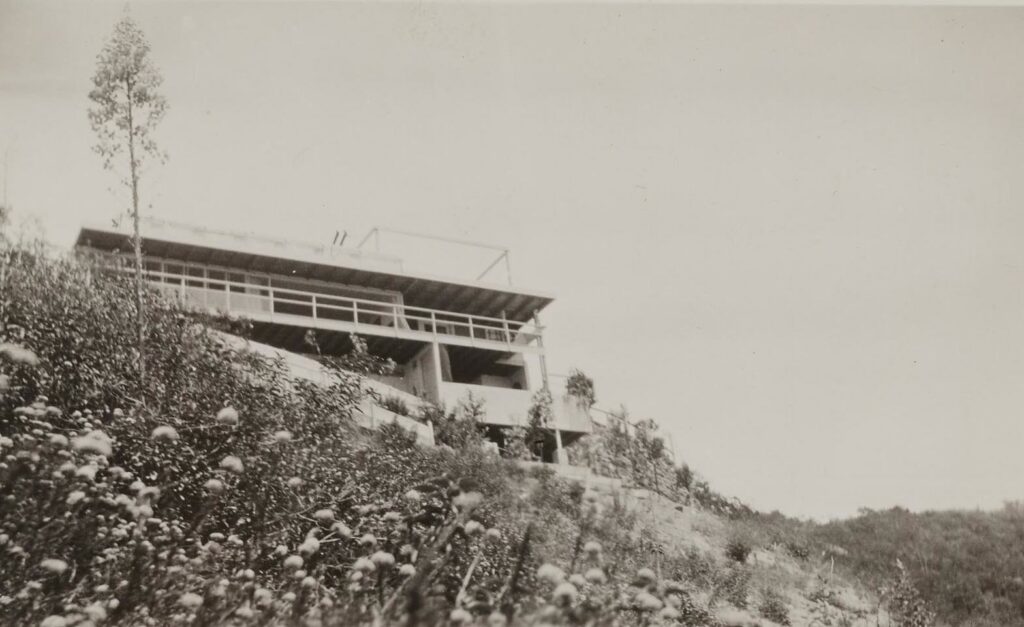
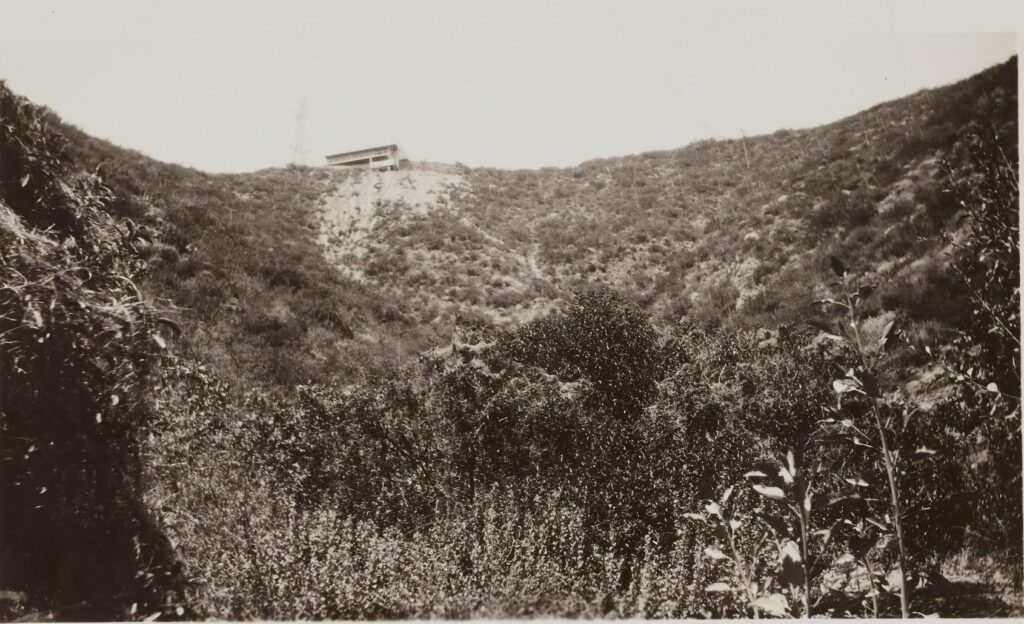
Built in 1933 in the Hollywood Hills by renowned modernist architect Richard Neutra, the house functioned both as Scheyer’s private residence and as a dynamic exhibition space and salon. Conceived by Scheyer as a gallery “airship” overlooking the city, it was intended as a place of refuge, experimentation, and exchange — a shelter for artists, thinkers, and new ideas.
Following Scheyer’s death in 1945, the house remained a private residence for nearly eight decades. It has since been acquired by a German art collector with the aim of restoring and reactivating the site in the spirit of Scheyer’s original vision: a vibrant space for artistic and intellectual engagement and a living monument to the many German-speaking émigrés to Southern California and their lasting impact on Los Angeles.
Currently undergoing careful restoration, the Galka Scheyer House will soon reopen as a site for artists-in-residence, exhibitions, and programming. In the spirit of Galka Scheyer and her vision for the house, Blue Heights Arts & Culture is committed to fostering transdisciplinary dialogue, supporting innovative artistic practices, and creating a platform for international exchange that connects historical legacy with contemporary art and scholarship.
More information about future residencies, programs, and tours will be available on this website soon.
Galka Scheyer (1889–1945) was a German-Jewish art dealer, educator, impresario, and a key mediator of European modernism in the United States. After studying art across Europe, she formed close relationships with artist Alexej von Jawlensky and the Bauhaus-affiliated artists Wassily Kandinsky, Paul Klee, and Lyonel Feininger. In 1924, they established the artist group “The Blue Four.” That same year, Scheyer relocated to the United States, where she became their West Coast representative, dedicated to introducing and promoting their work to U.S. audiences.
In 1933, Scheyer acquired a site in the Hollywood Hills and commissioned renowned Austrian-American architect Richard Neutra to design her residence. During a final trip to Germany in 1933, she saved more than 200 artworks from the Nazis and managed to bring them to California.
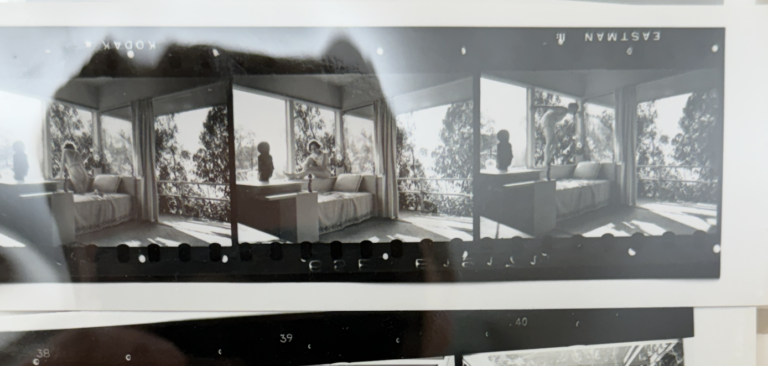
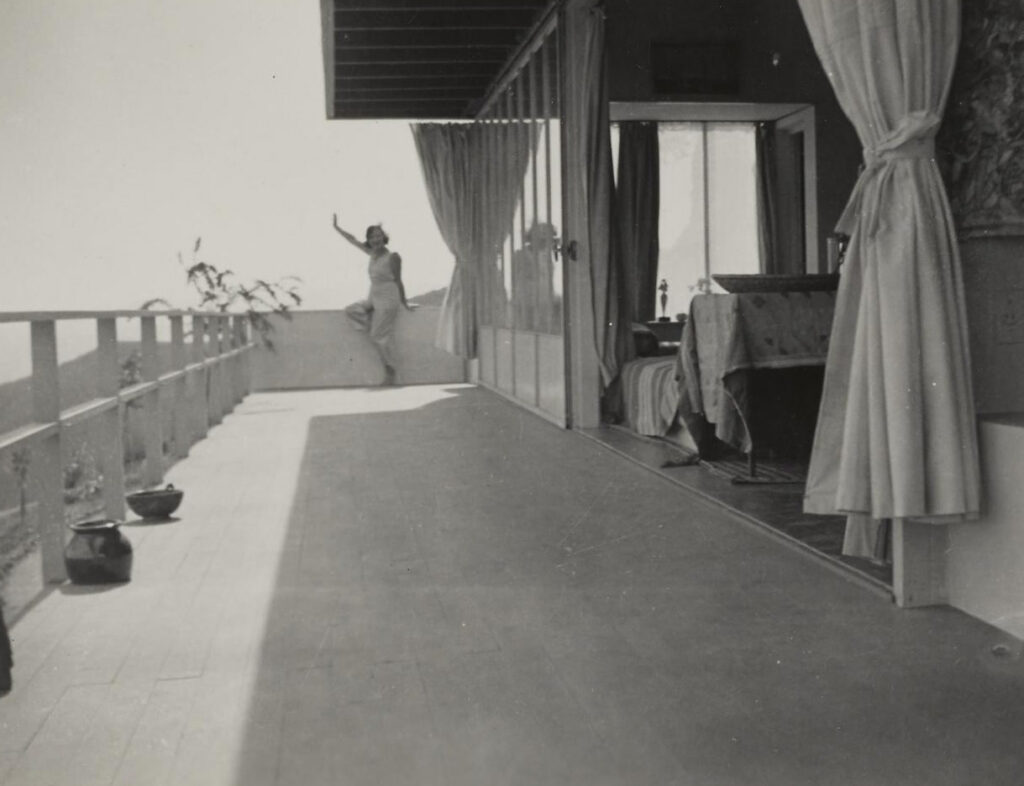
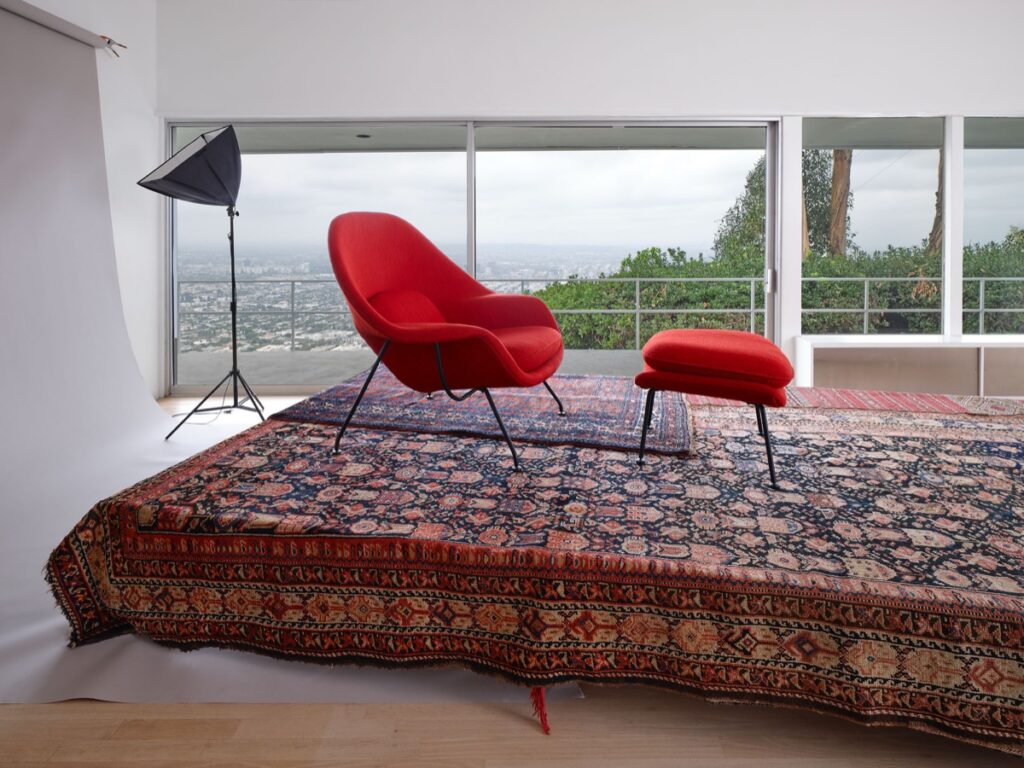
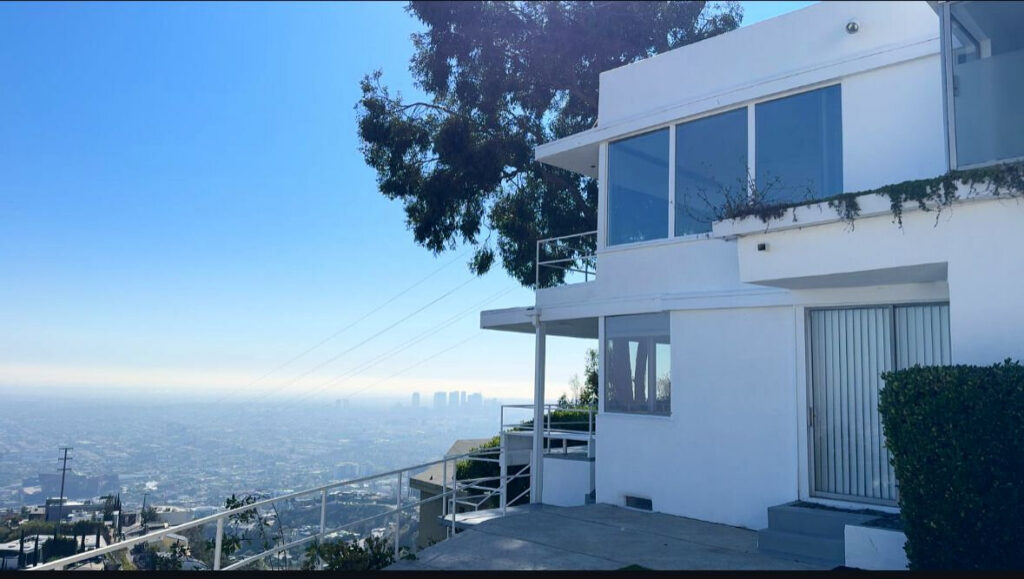
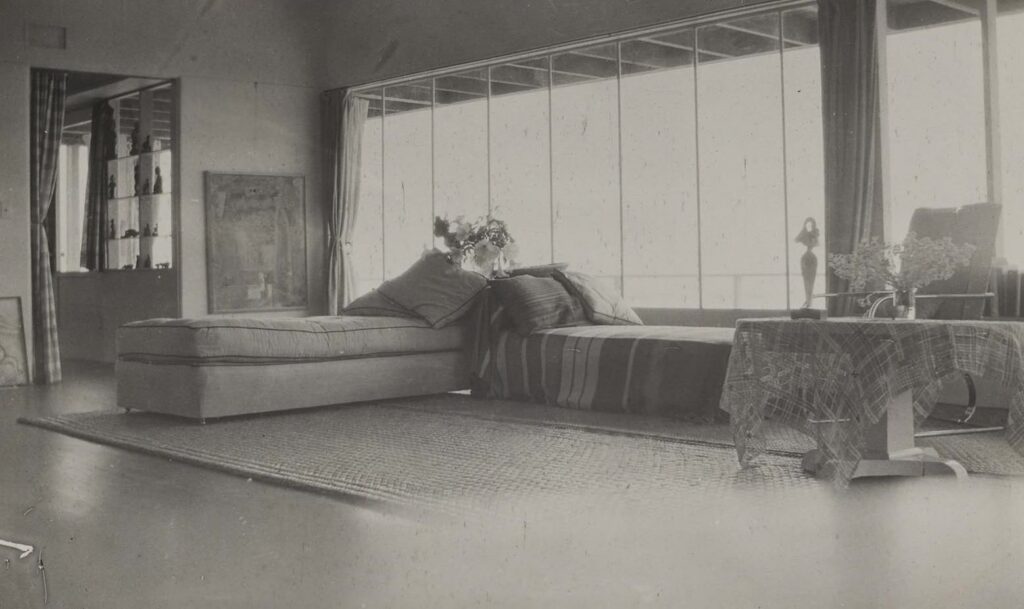
Completed in 1934, the house was conceived as a hybrid space — at once a private home, gallery, and salon. It embodied key principles of modernist architecture, including open-plan living, fluid transitions between interior and exterior spaces, and a light, elevated structure that engages with the surrounding landscape.
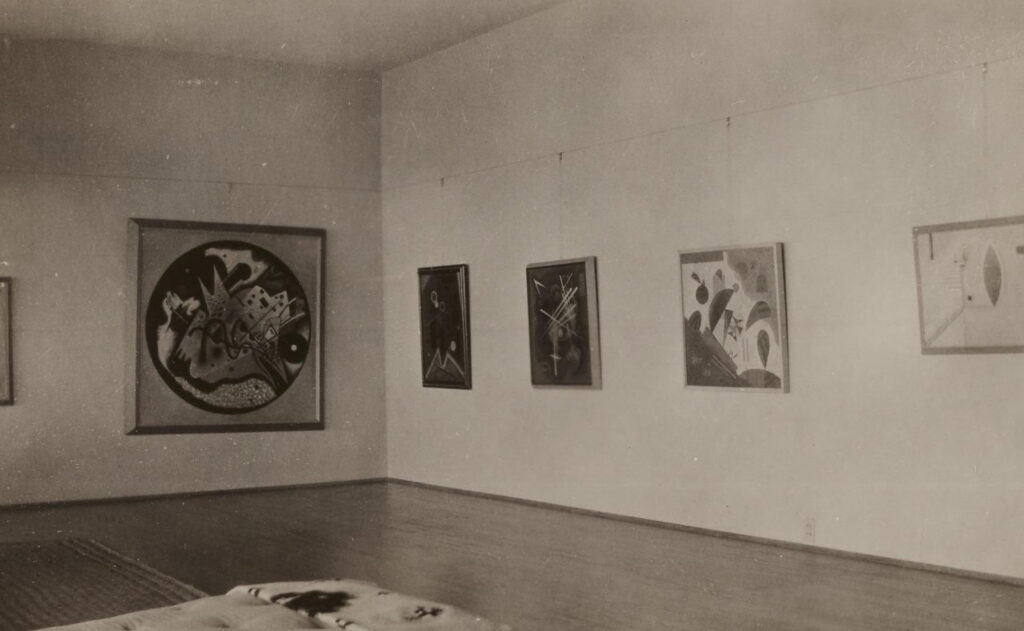
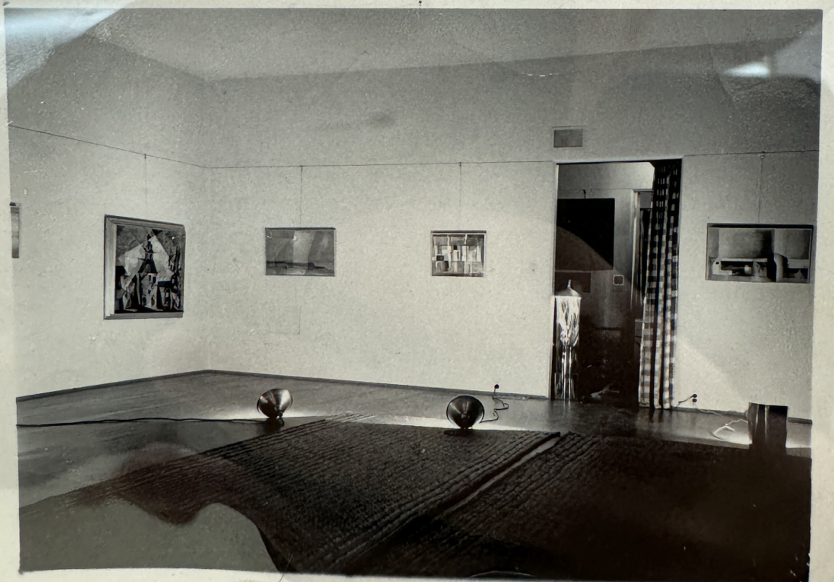
During Scheyer’s lifetime, the house became an active site of artistic exchange. Among its visitors were experimental filmmaker Maya Deren, prominent émigré filmmakers including Fritz Lang and Josef von Sternberg, composers such as Arnold Schönberg and John Cage, and the director of the New Bauhaus László Moholy-Nagy. She used the gallery room to display her collection and the artworks she saved from Germany.
The house became a space for people to engage with abstract art and the ideas behind it. Scheyer lived and worked in the house until her early death in 1945. At this point she had built a significant art collection, which she ensured would remain in California. This collection later became foundational to the Pasadena Art Museum and continues to shape the holdings of the Norton Simon Museum today — testifying to her lasting impact on the cultural landscape of Southern California.
Following her death, the house remained in private hands for decades. Today, it stands as both an architectural landmark and a site of cultural memory, reflecting Scheyer’s vision and her role in establishing Los Angeles as an important center for modern art.
In March 2025, renowned architectural firm Escher GuneWardena Architecture was commissioned with the restoration and remodeling of the Galka Scheyer House. Based in Los Angeles and led by the architects Frank Escher and Ravi GuneWardena, the firm specializes in the careful restoration of important buildings from the mid-century modern movement. They most recently completed their extensive work on Richard Neutra’s Lovell Health House (built between 1927-1929) before turning their attention to the Scheyer House, with the aim of preserving its historic architecture while also integrating contemporary needs into the building. In addition to their work on Neutra’s Lovell Health House, they have undertaken multiple restoration projects including the private residence of the prominent architect Paul R. Williams.
The firm has also contributed to the Watts House Project, a community revitalization initiative launched by artists around the iconic Watts Towers, which uses art and architecture as catalysts for social development. Their work on historic structures includes the restoration of John Lautner’s legendary Chemosphere house (1960) and his private residence (1939), Gregory Ain’s Greene Residence (1952), and A. Quincy Jones’s historic Pilot House (1948).
During a site visit to the Galka Scheyer House, architect Frank Escher remarked: “The Scheyer House is one of those often-forgotten places in Los Angeles where significant architectural and cultural history intersect. It is a stroke of good fortune that the house has found new owners and stewards who recognize this and wish to use it as the starting point for an exciting project. What is particularly interesting for us is the archival, almost archaeological research that accompanies such projects: The aim is to examine the original intentions of the architect and the client, and to make them visible through a careful restoration.”
During the first phase of the restoration project between March 2025 and May 2026, the team extensively researched the buildings development and changes throughout Scheyer’s initial ownership since 1934, also considering the changes made by Gregory Ain in 1936, to work out a historic restoration and preservation plan that serves the house’s new use as an artist’s residence, while incorporating structural retrofitting to ensure its safety and longevity for the decades to come.
Historic Picture Rail
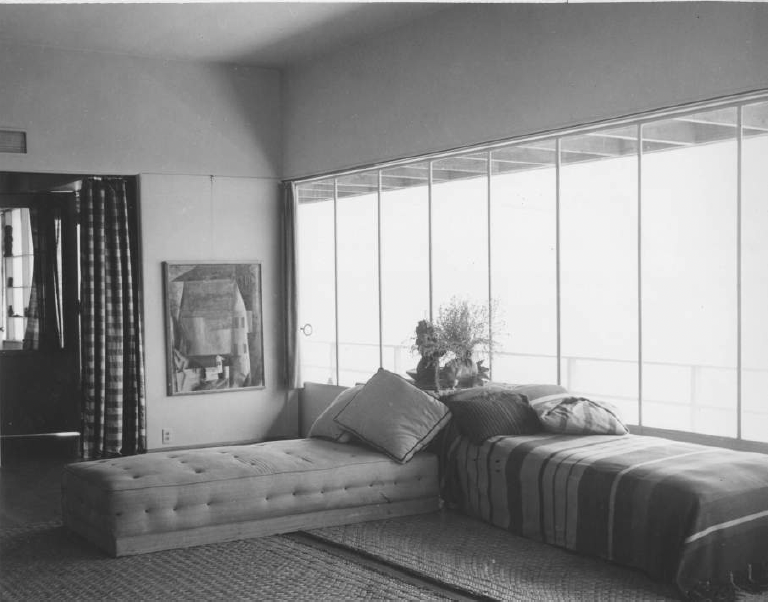
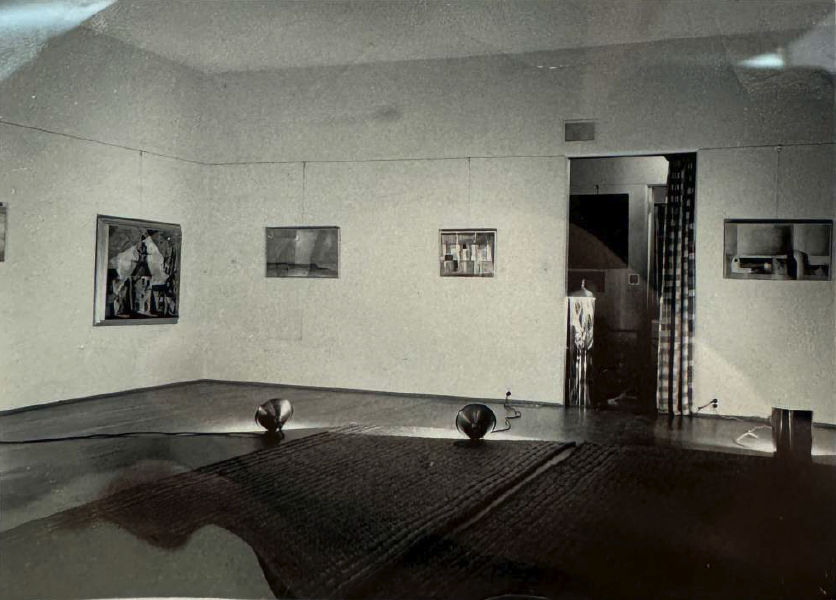
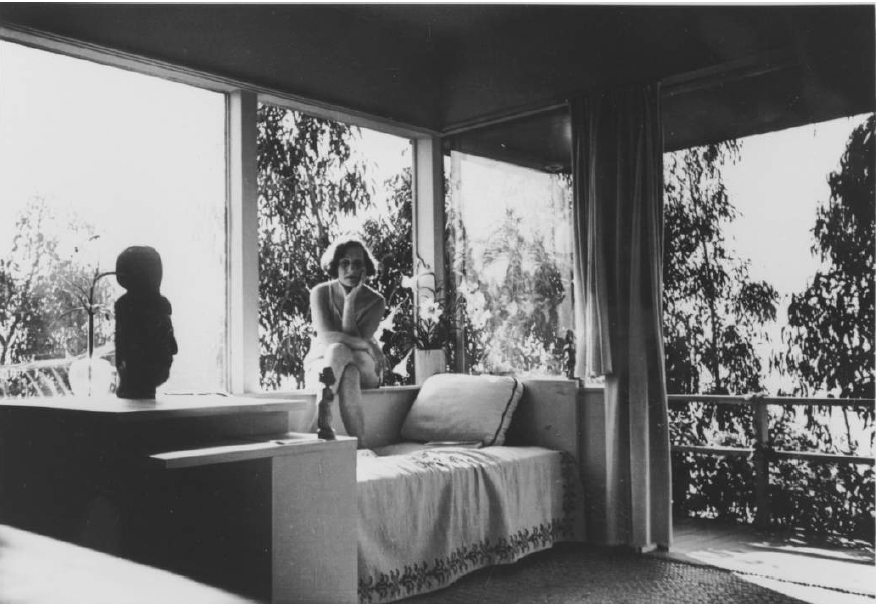
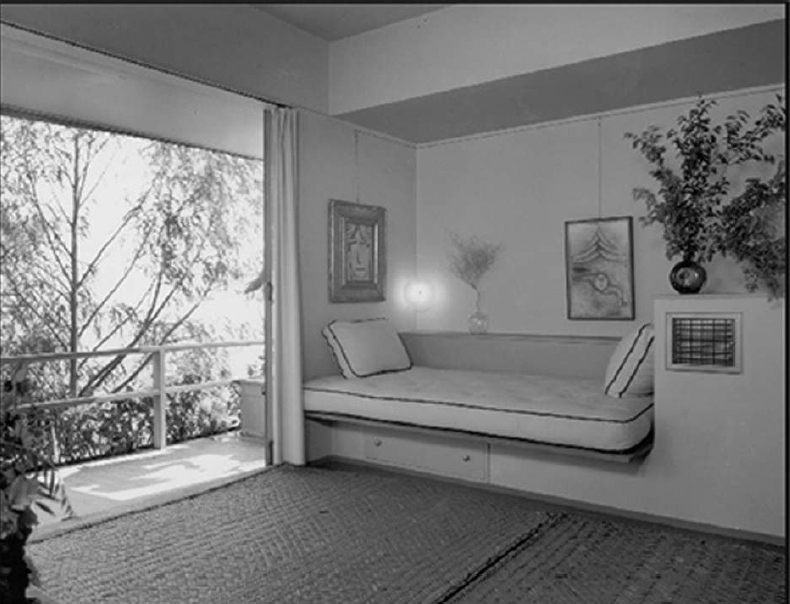
The art rail fixture in the gallery room, c. 1935. Photo: Special Collections Getty Research Institute, Peg Weiss Archive.Art rail in April 2026. Photo: Benno HerzArt rail in April 2026. Photo: Benno Herz
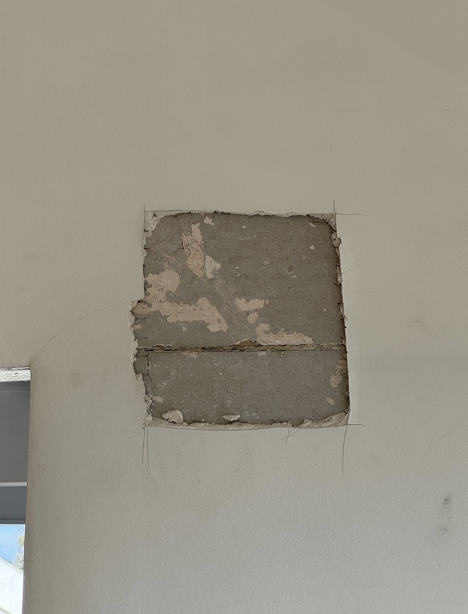
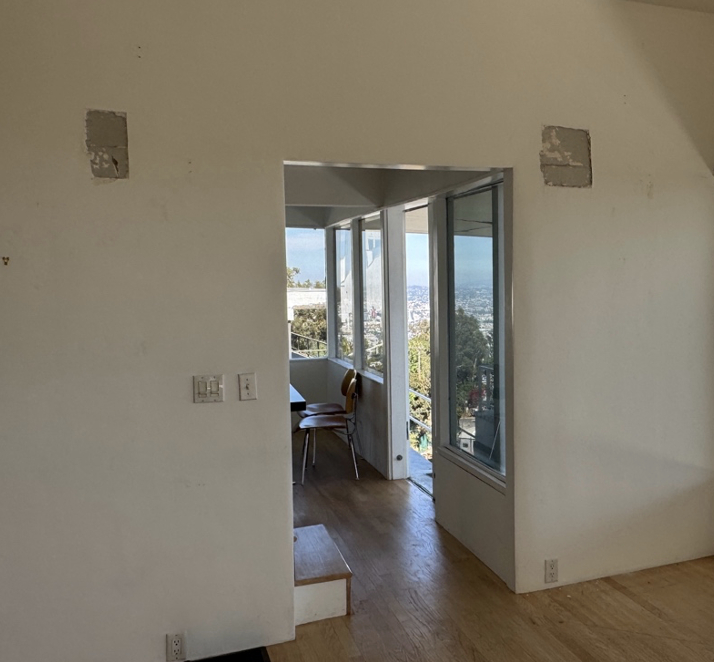
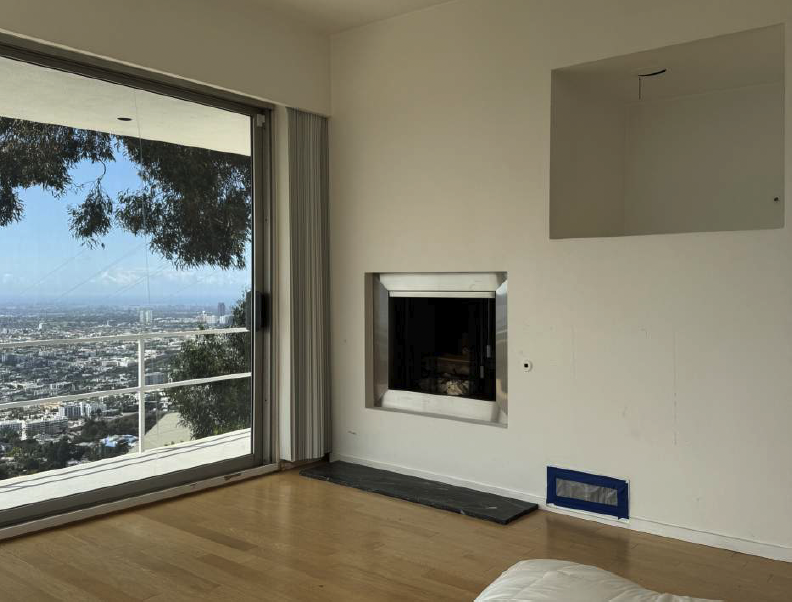
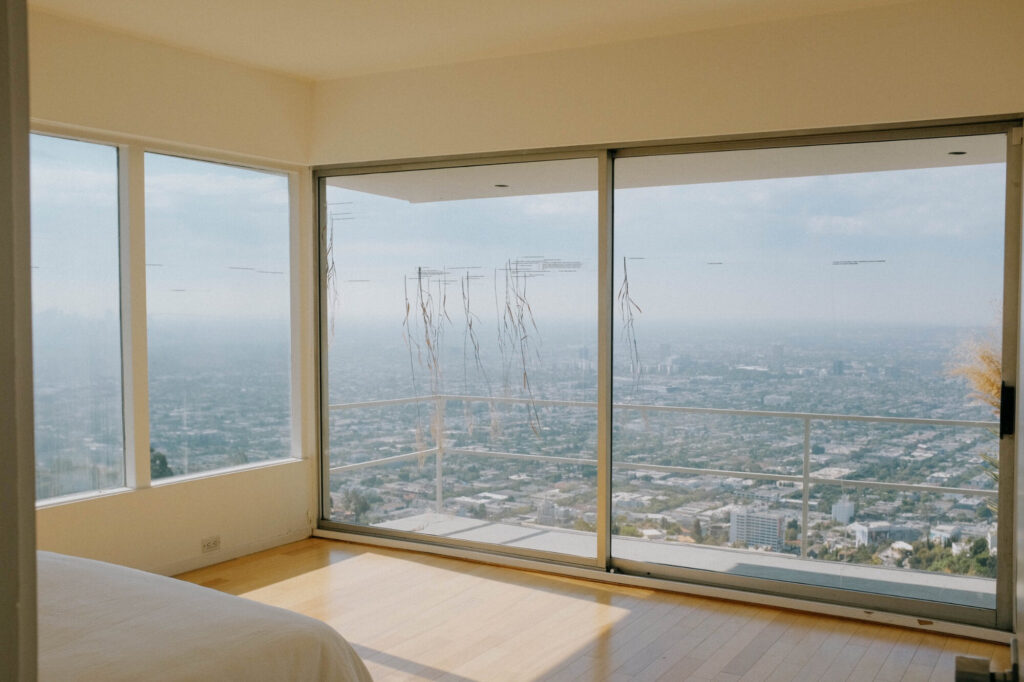
One of the many interesting features of the house that has been discovered during this first phase is Scheyer’s ‘picture rail’ hanging system in the gallery and upstairs bedroom: a recessed metal track that was embedded in the walls, allowing artworks to be displayed and easily exchanged using hanging wires.
The architects confirmed that an identical fixture exists in Neutra’s Lovell Health House. The fixture is clearly visible in photographs of Scheyer’s gallery room and upstairs bedroom.
The architects initially suspected that the original system is still hidden behind the plaster and could be uncovered and repaired during the restoration process, and this assumption was later confirmed when parts of the wall were cut open and the railing was revealed. The plan is to restore the original picture rail for future exhibitions projects.
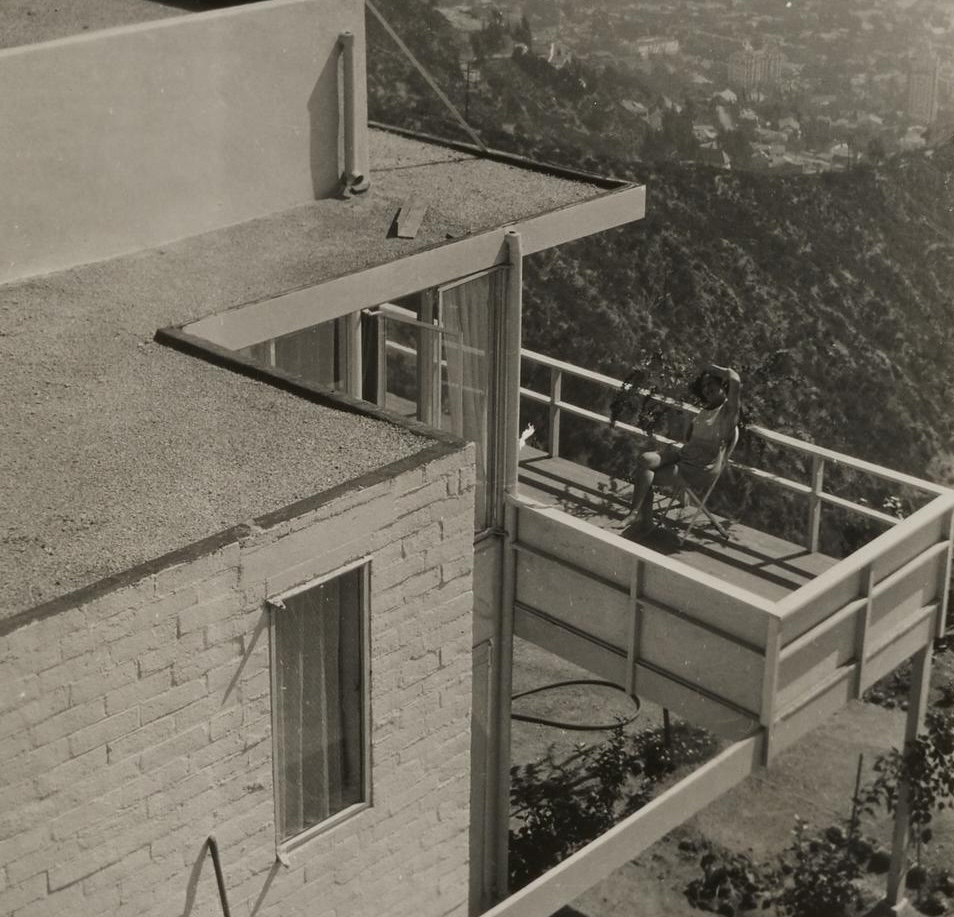
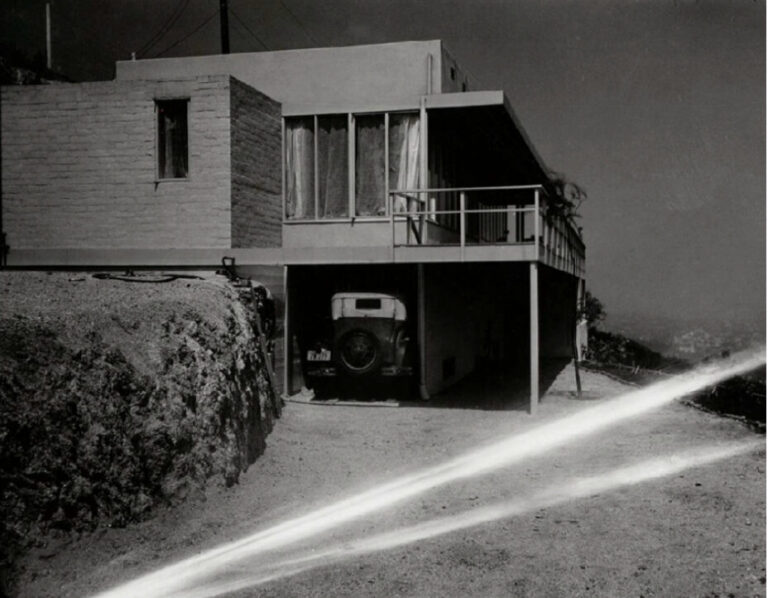
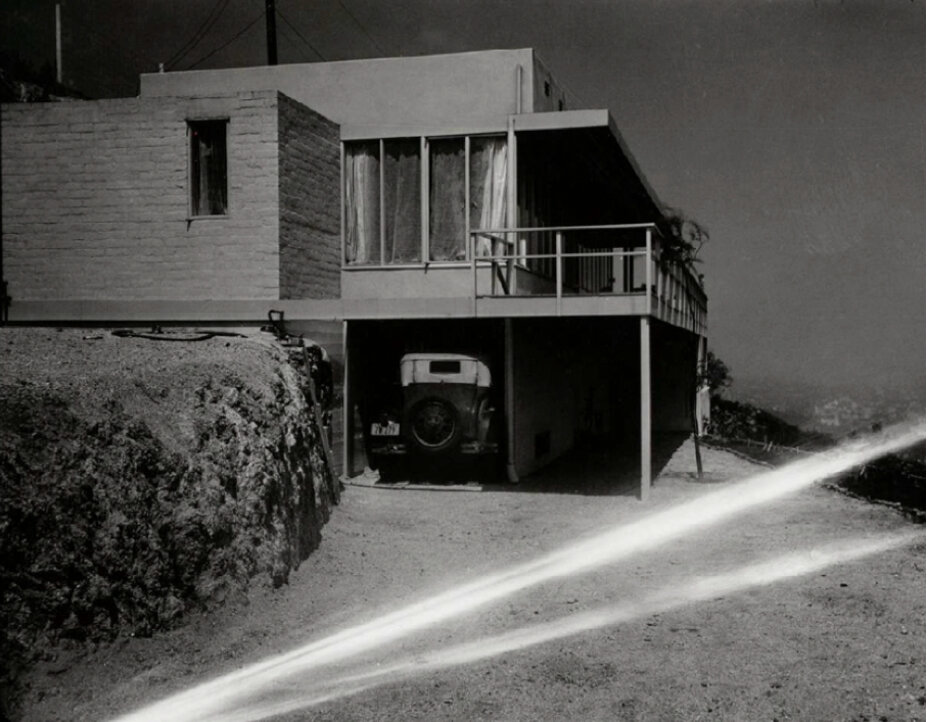
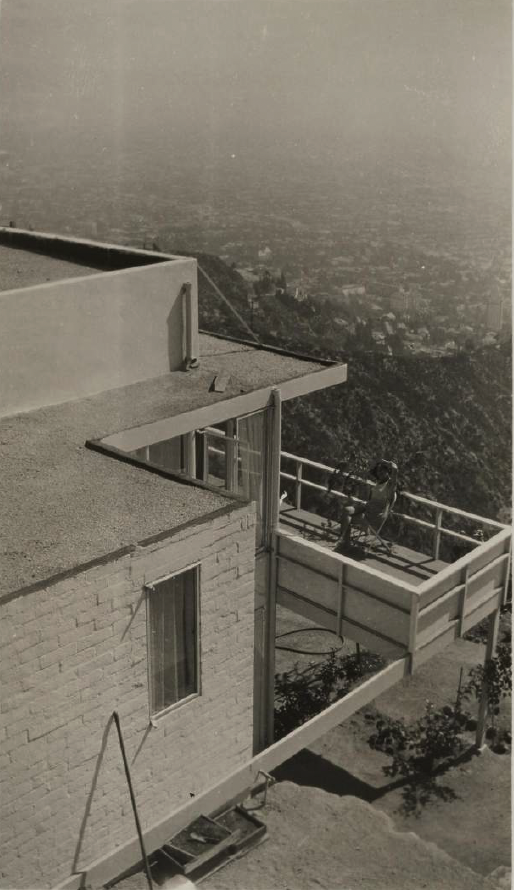
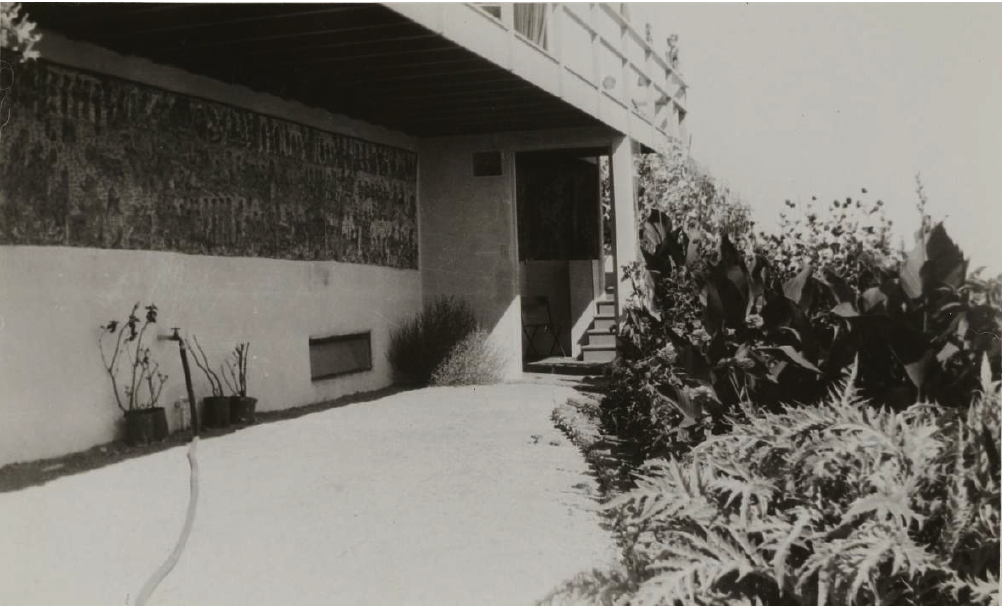
A historic photograph from the CalPoly Pomona Neutra archive confirms that the small room above the garage, which functioned as an art storage room during Scheyer’s time at the house, used to be enclosed by a brick structure. The brick structure, which also served as a natural temperature control mechanism and as Scheyer’s storage for art, was covered in later years. The architects since confirmed that the brick structure was just plastered over and will be excavated and restored as part of the restoration efforts.
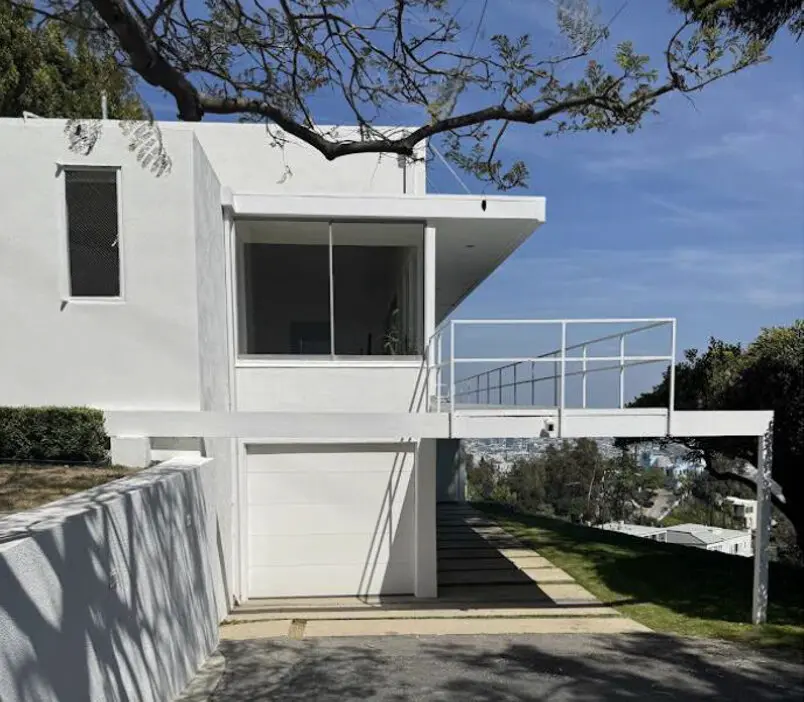
The altered spider leg and storage room in 2025
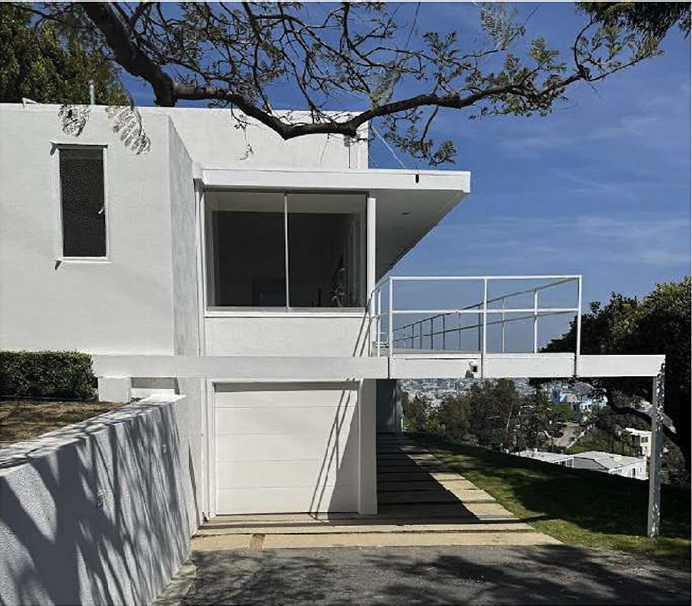
Another important finding by the architects was the alteration of the original beam on the West entrance of the building. The same photograph of the house from the CalPoly Pomona archive, taken during Scheyer’s residence at the house (her Ford Convertible can be seen parked in the garage), shows that the “spider leg,” a typical feature of Neutra’s later work, must have been added at a later point in the building’s history, as the historic photograph clearly shows a simple straight post. This change was most likely made in an attempt by a previous owner to make the building look more like a later Neutra house. The original beam will be reconstructed during the restoration.
Survey LA & Historic Places LA
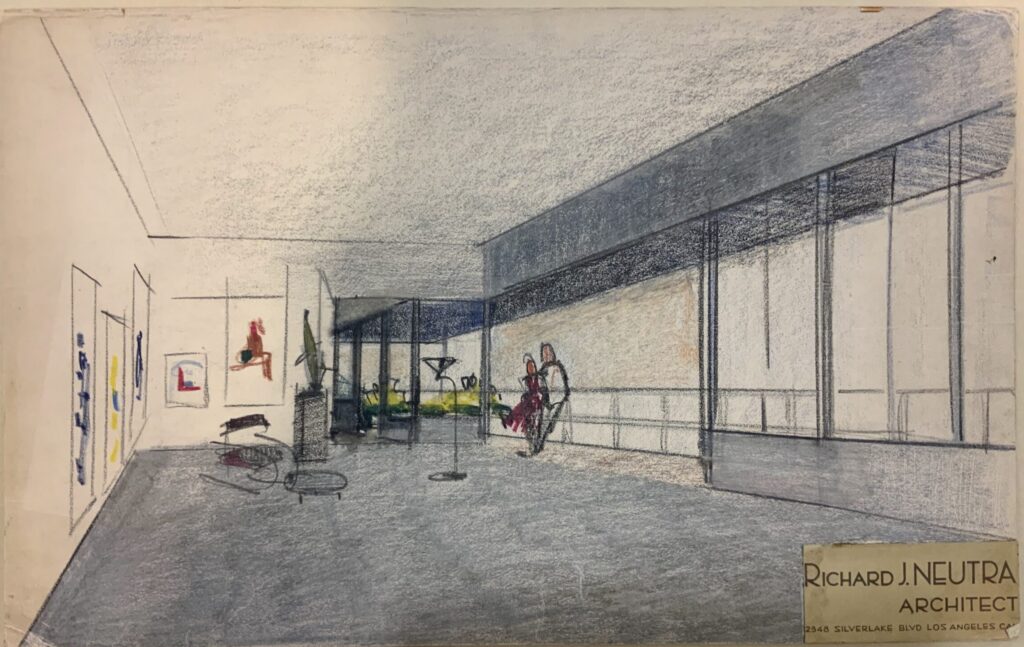
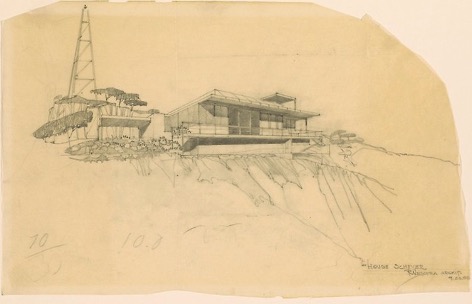
1933 Perspective Study by Richard Neutra. Art Institute Chicago
In June 2026, the house was added to SurveyLA, the City of Los Angeles’s historic resources survey, and to HistoricPlacesLA, an online inventory of historic resources. SurveyLA represents a landmark initiative in urban heritage documentation, functioning as the City of Los Angeles’s principal tool for the identification, documentation, and evaluation of historic properties and districts. The restoration of the Galka Scheyer House is projected to continue through summer 2027.
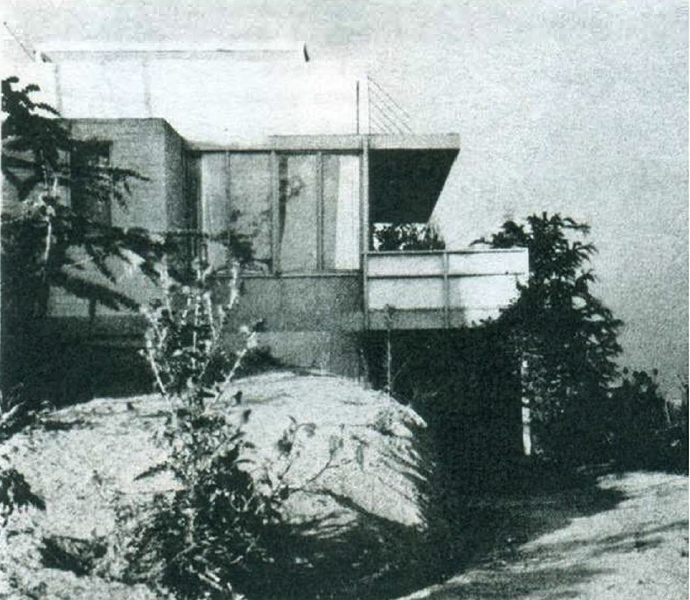
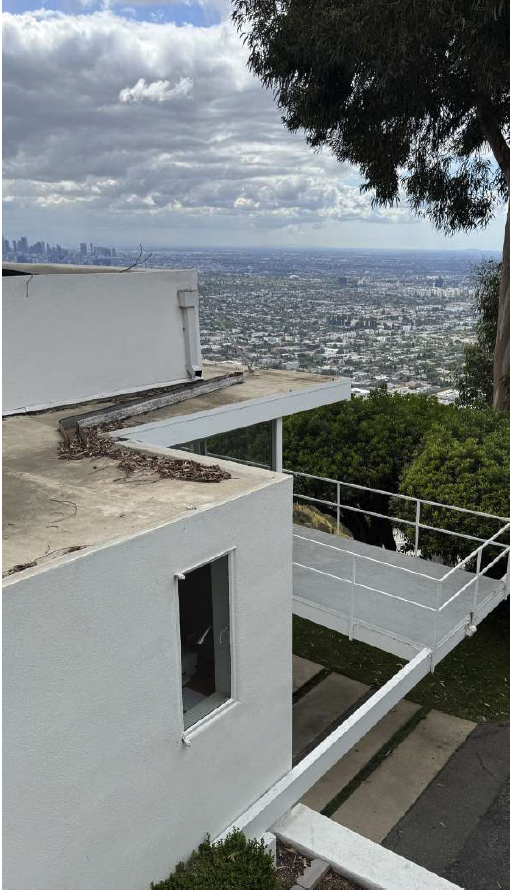
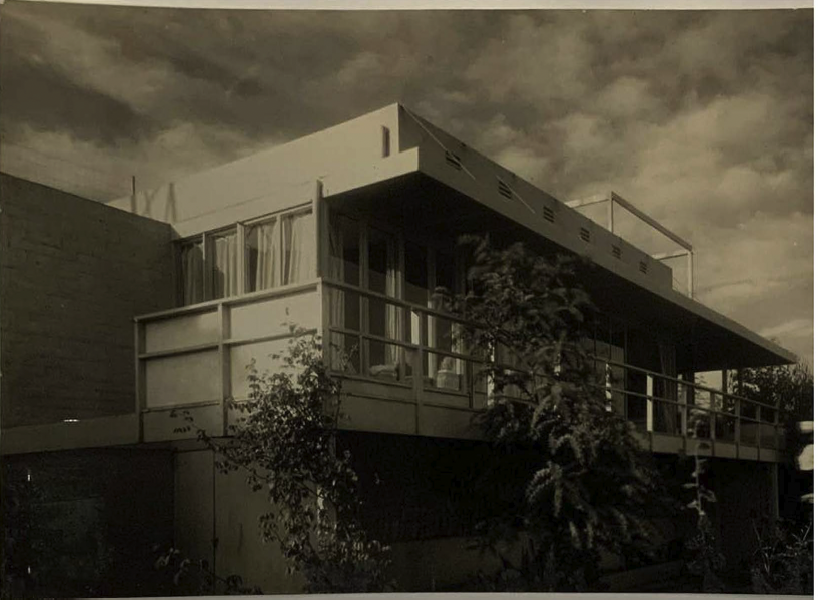
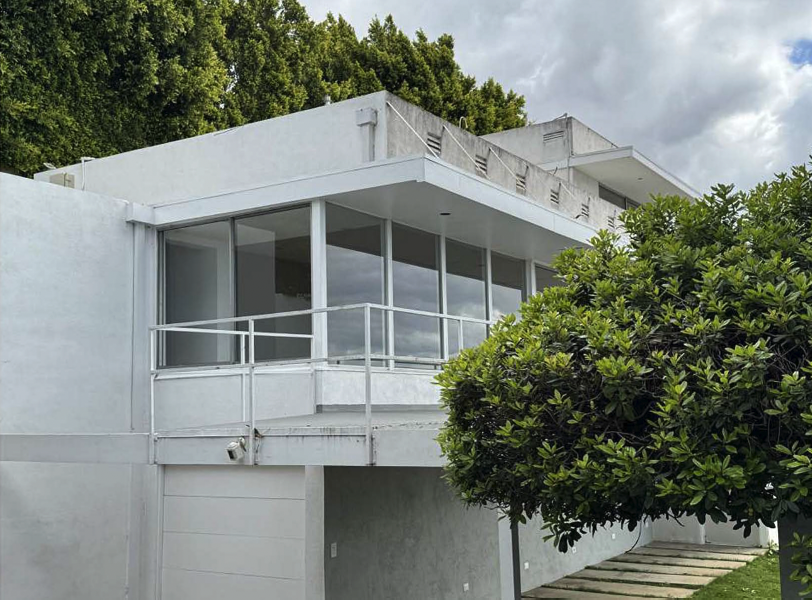
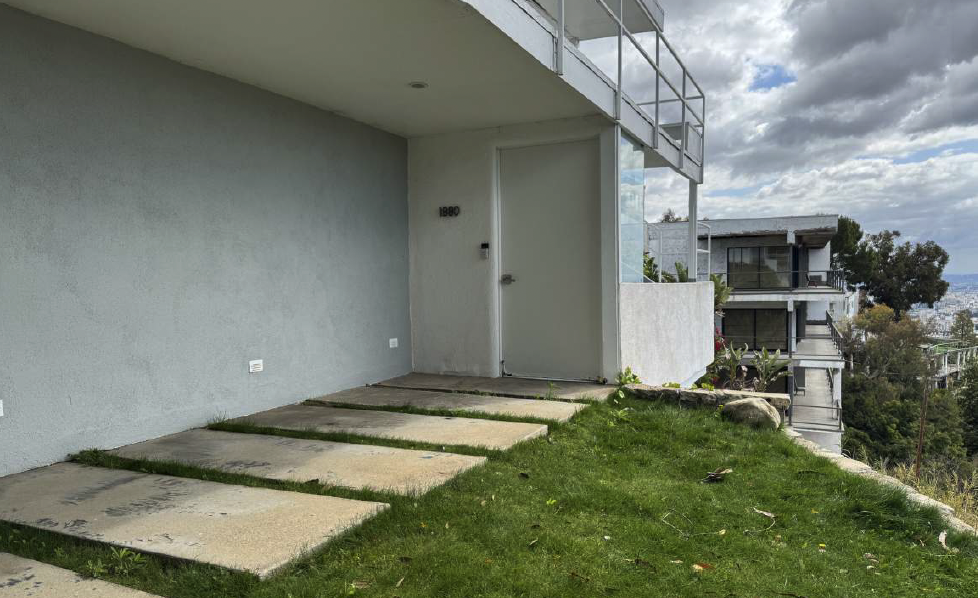
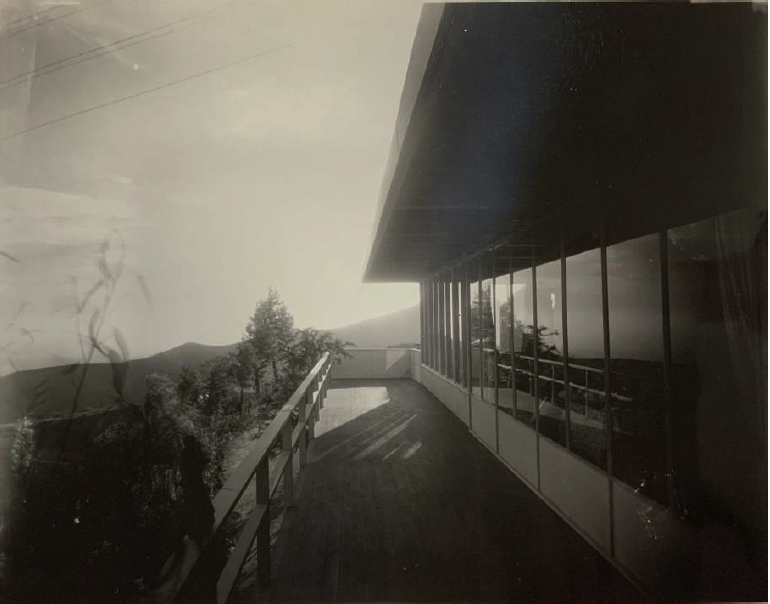
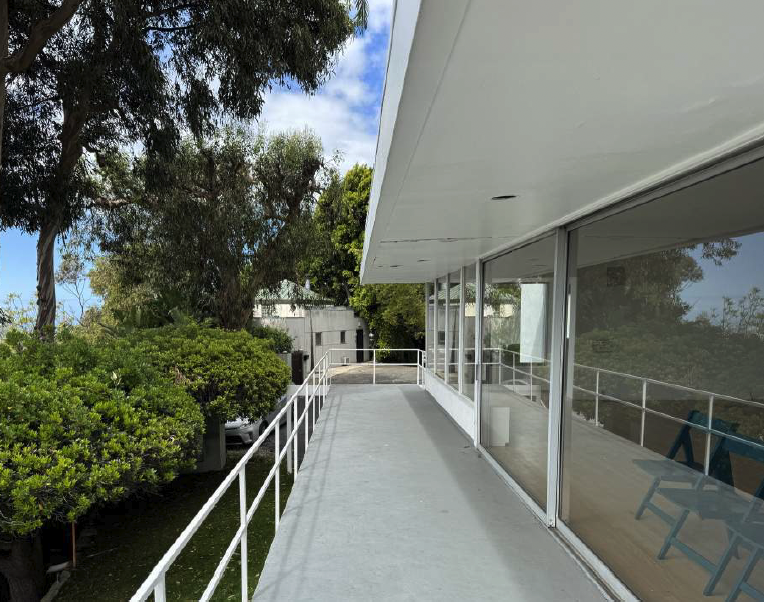
Past & Present (Pre-Restoration)
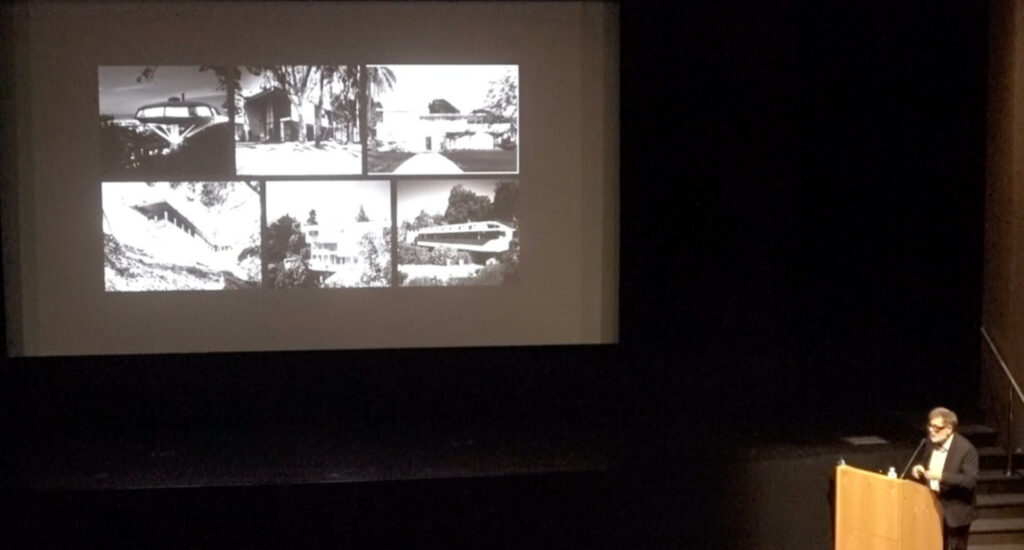
Lecture: Richard Neutra’s “Galka Scheyer House”: Past, Present and Future
On May 2, 2026, the architects provided exclusive insight into the restoration process and their research at an event hosted by the Norton Simon Museum in Pasadena. A video of the lecture and presentation can be found here.
Frank Escher at the Norton Simon Museum, May 2, 2026. Courtesy of the Norton Simon Museum Pasadena
We will share further updates on the restoration project on this page soon!
Exhibition
Beatriz Cortez — Temporary Home
Jul 18 – 27, 2025 · The Galka Scheyer House
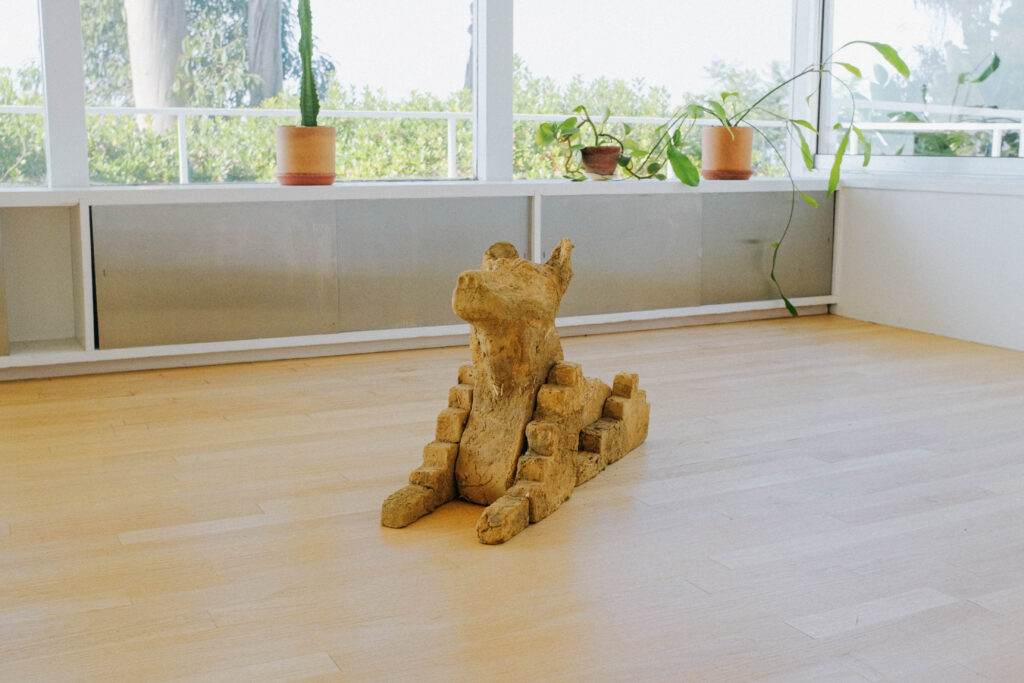
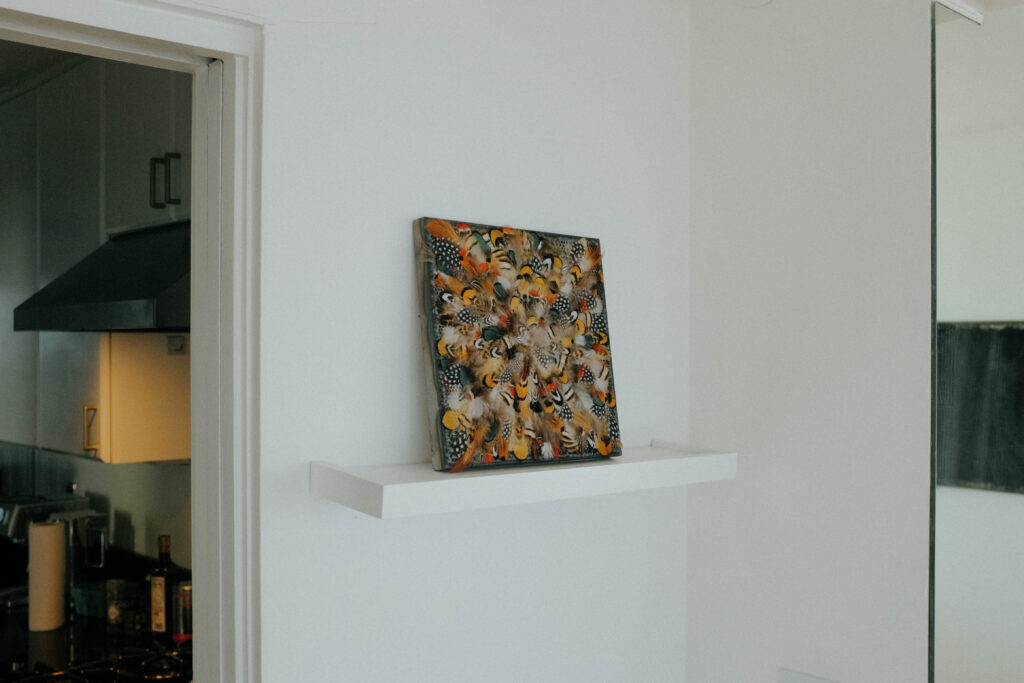
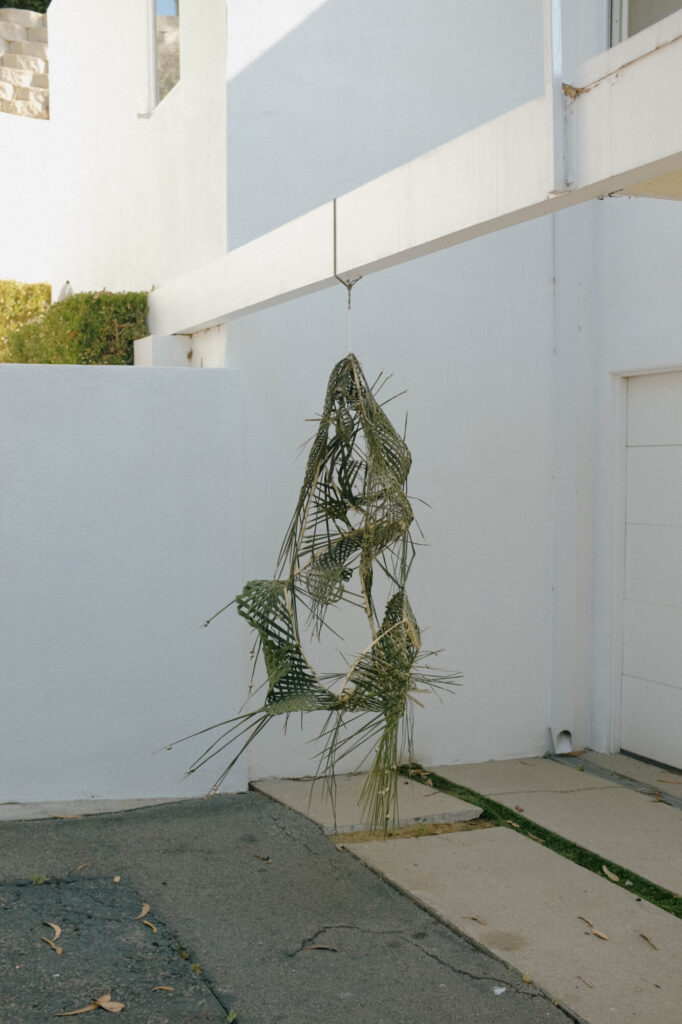
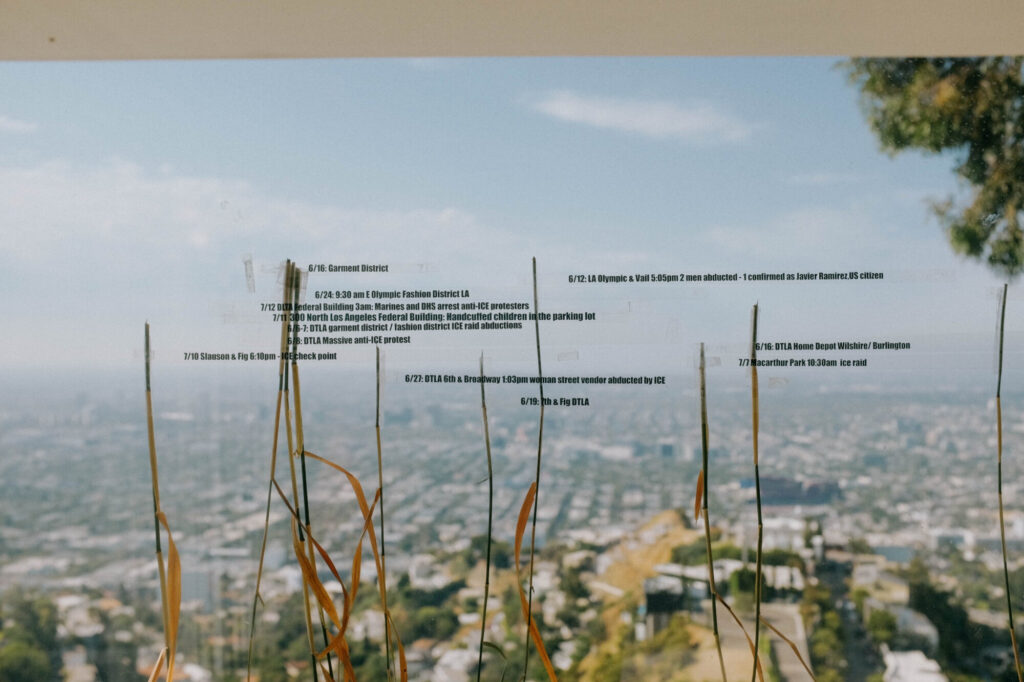
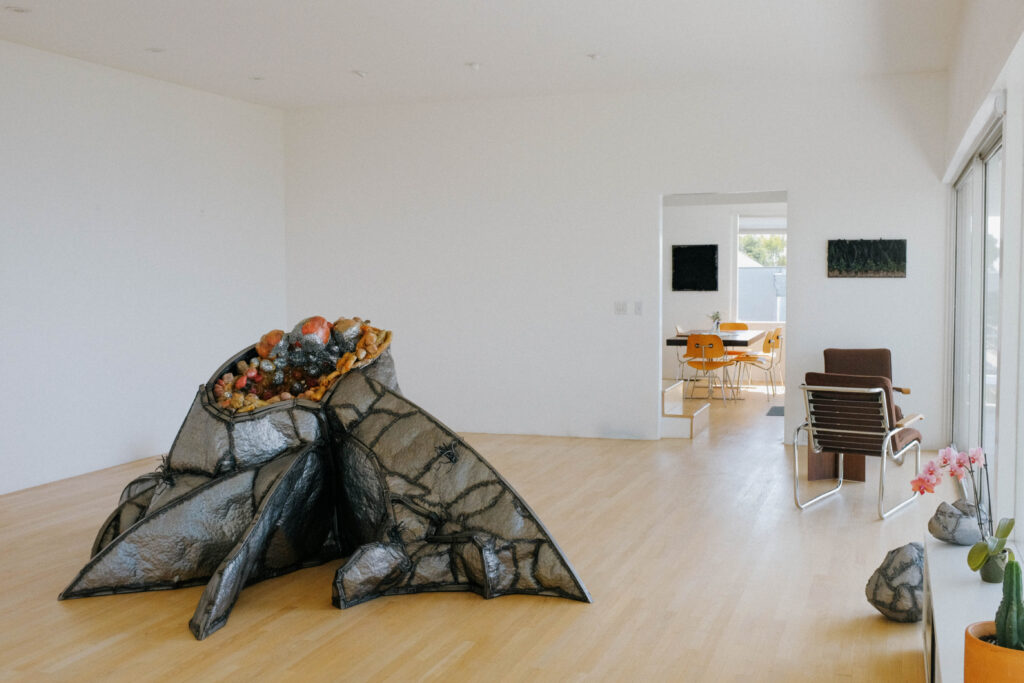
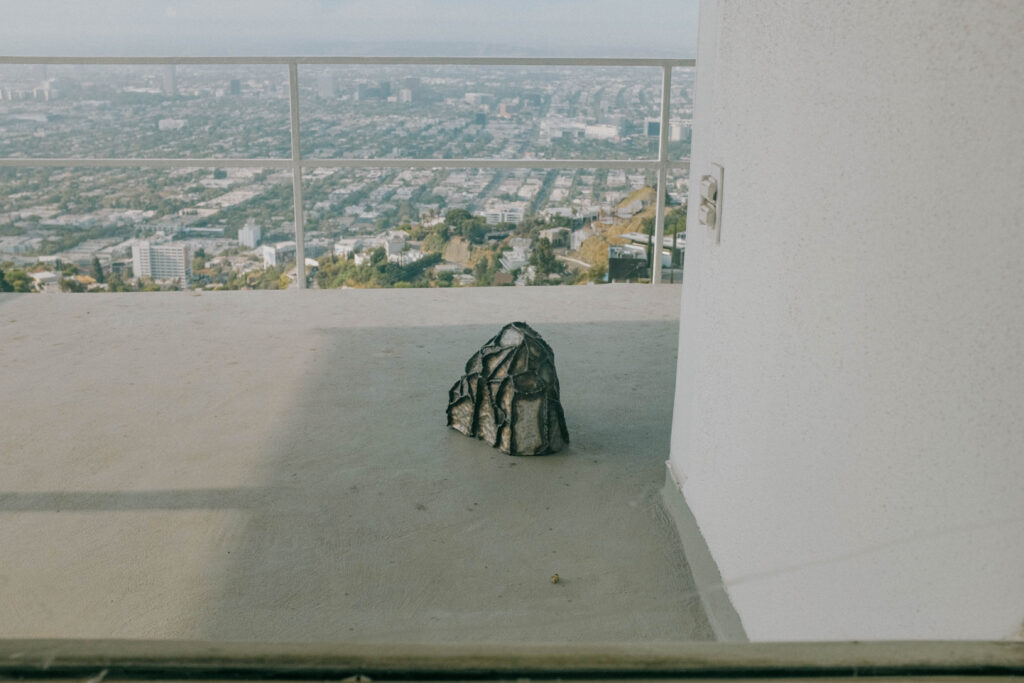
After the wildfires in L.A. in January 2025, the house became a temporary emergency residence for artist Beatriz Cortez and a space of collective encounter. “Temporary Home” marked the first exhibition at the Galka Scheyer House since 1945. With works by Beatriz Cortez, Phillip Byrne, Rafa Esparza, Sarah Espinoza, Tatiana Guerrero, Maria Maea and Marjorie Williams.
Photos by Izak Bunda1 / 8
Dates
Jul 18 – 27, 2025
Location
1880 Blue Heights Drive Los Angeles, CA 90069
Following the devastating wildfires in and around Los Angeles in January 2025, the Galka Scheyer House entered a new chapter as the temporary residence of Beatriz Cortez. Cortez, a Salvadoran-born, Los Angeles–based artist, is known for her interdisciplinary practice spanning sculpture, installation, and drawing. Her work often engages with themes of migration, memory, futurity, and survival, frequently drawing on histories of displacement and imagining alternative temporalities and speculative futures. During her stay, Cortez conceived of the house as a “Temporary Home,” transforming it into both a site of reflection and a space of collective encounter. Until the end of July, the house functioned not only as a place of residence but also as an evolving artistic environment shaped by dialogue, presence, and exchange.
Before her departure, Cortez initiated an exhibition project that invited a group of peers to inhabit the space alongside her—conceptually and physically—in order to engage in a shared conversation with the house and with Galka Scheyer’s legacy. Departing from the house’s historical role as a site for painting and display, the project foregrounded sculpture, allowing the interior to be reimagined through new material and spatial interventions.
In doing so, the exhibition explored the idea of the house as a vessel of layered temporalities: a site where past and present intersect, where histories of exile and refuge resonate with contemporary experiences of precarity and belonging. Emphasizing the generative potential of impermanence, the project celebrated the gifts of temporary homes, the formation of community, and the possibility of time travel—both metaphorical and material—within a space so deeply embedded in the cultural history of Los Angeles.
A Hollywood Hills Gallery-Home Is Reborn as an Artist’s Residency by Matt Stromberg, Hyperallergic Magazine. Read here.
Hollywood Hills Home Will Open to Public Artist Residence, KCRW. Read here.
The Best Art Shows Around the World in 2025, HyperallergicMagazine. Read here.
Photo: Izak Bunda
Documentary Film
In Blue Heights: Galka Scheyer in Los Angeles
In Development · Teaser
A Documentary Film by Doris Berger & Benno Herz — A layered portrait of Galka Scheyer, her activities and networks in the U.S., and the resoration of her house, weaving together archival material, historic footage, expert interviews and contemporary impressions.
This documentary film will offer an extensive glimpse into the life of Galka Scheyer, the richness of the archival holdings, and the current transformation and restoration of her gallery house. The full documentary will expand on Scheyer’s biography and achievements, capturing crucial moments in the restoration of the house and featuring extended interviews on Scheyer and Jewish émigré culture in Los Angeles. It will show Scheyer’s upbringing in Germany, her artistic formation in Europe, her transformation into a collector, curator, and educator in the United States, and her life within a community of exiles during World War II. Throughout, the film celebrates Scheyer’s visionary approach to modern culture and her enduring commitment to community. More information coming soon.
Filmed Conversation
“The Galka Scheyer House” – A Conversation with Raymond Neutra & Alex Ross
2025 · The Galka Scheyer House
“The New Yorker” critic Alex Ross sat down with Raymond Neutra, the architect’s son and Director of the Neutra Institute for Survival Through Design, to unpack the layered history of the house. The filmed conversation is accompanied by archival and contemporary footage.
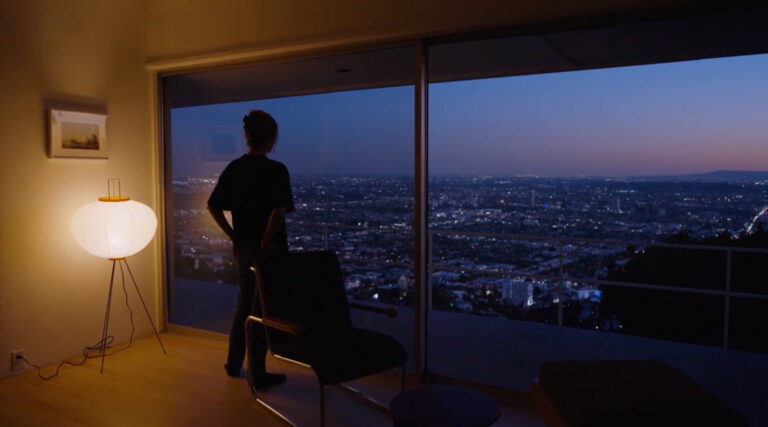
Perched high in the Hollywood Hills, the Galka Scheyer House is more than a striking example of modernist architecture — it is a hidden portal into an important chapter of L.A.’s cultural history. This first-ever documentary on Galka Scheyer (1889–1945) tells the story of her life as an art impresario, curator, artist, and modernist trailblazer, a visionary who introduced the U.S. to the artist group “The Blue Four,” consisting of Lyonel Feininger, Wassily Kandinsky, Alexej von Jawlensky, and Paul Klee, and their concepts of abstract modernist art. Scheyer left behind her own painting career to become a tireless advocate for European modernism, forging new artistic terrain in California. When Richard Neutra — already a star of modernist architecture — built her a spectacular Hollywood Hills home and gallery in 1934, it became a vibrant gathering place for some of the era’s most radical minds such as John Cage, Maya Deren, and László Moholy-Nagy, as well as many other artists who fled Europe’s unraveling democracies. Overlooking Los Angeles, they debated, dreamed, and reimagined what art could be. Raymond Richard Neutra, son of the architect and director of the Neutra Institute for Survival Through Design, and Alex Ross, music critic at “The New Yorker” and cultural historian, guide viewers through the house’s storied walls. From rare archival materials to intimate present-day reflections, this documentary traces the intertwined lives of two modernist key figures and the home that once united them. After nearly a century, the house is now being transformed into a place for art, once again opening its doors to artists and thinkers, just like Scheyer envisioned in the 1930s.
The video premiered at the Neutra Institute for Survival Through Design in Silverlake, housed in the historic offices of Neutra, on June 7, 2025, with a subsequent panel discussion about Scheyer, Neutra, and the “Blue Four” featuring architectural historian Barbara Lamprecht, Escher, GuneWardena, and Raymond Neutra. The film was subsequently screened at the Münchner Architekturfilmtage– Häuser erzählenat the Filmmuseum München on March 24, 2026.
Produced by Benno Herz and Max Grimminger Directed by Tyler Jack Anderson Edit and music by Tyler Jack Anderson Camera: Patrick Shaffer and Alexander Bergman Sound: Patrick Shaffer Archival Research & Concept: Benno Herz
Presented by the Neutra Institute for Survival Through Design and Blue Heights Arts & Culture.
Residency
Saskia Warzecha — Villa Aurora Fellow
Oct 2025 – Jan 2026 · The Galka Scheyer House
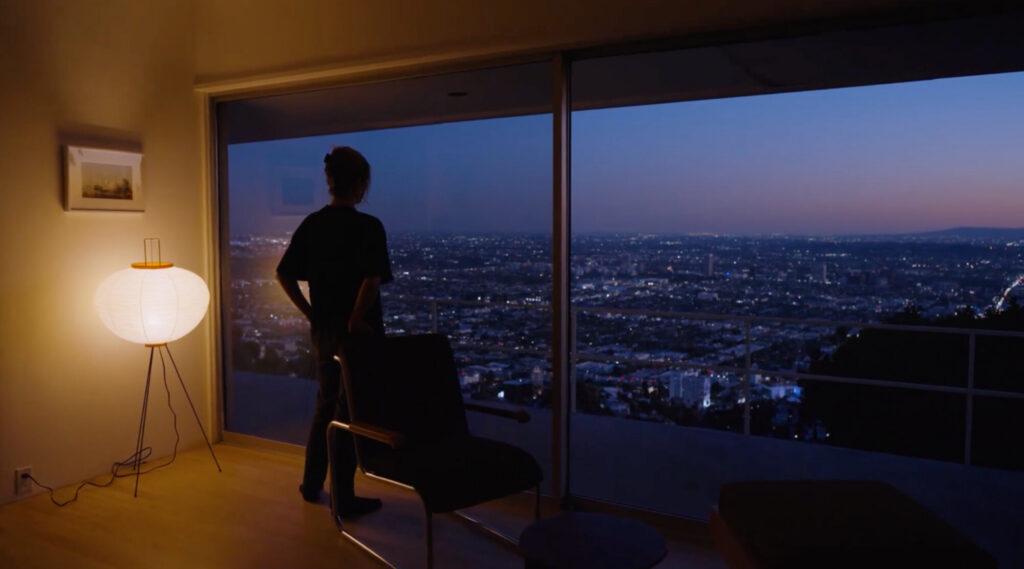
A fellowship for poet Saskia Warzecha at the Scheyer House, in collaboration with Villa Aurora. A short film captured her stay and creative work at the house.
In January 2025, the Palisades Fire came within feet of the artist residency Villa Aurora, located in the former exile home of writer Lion Feuchtwanger. The house survived, making it possible to continue its longstanding mission of promoting intercultural exchange and fostering dialogue across the arts. In the aftermath of the fire and during the process of rebuilding, Villa Aurora expanded its activities beyond its physical site, collaborating with local partners across Los Angeles to present the work of its fellows within the city. Within this framework, poet Saskia Warzecha realized an off-campus fellowship project at the Galka Scheyer House. Hosted in collaboration with Blue Heights Arts & Culture and made possible through the support of the Grimminger Family, the project formed part of a broader initiative to sustain artistic production and visibility during a period of recovery and transition. This filmportrait captures Warzecha’s time at the Scheyer House in captivating images.
Exhibition
Rita McBride — wunderkammer
Feb 14 – Mar 8, 2026 · The Galka Scheyer House
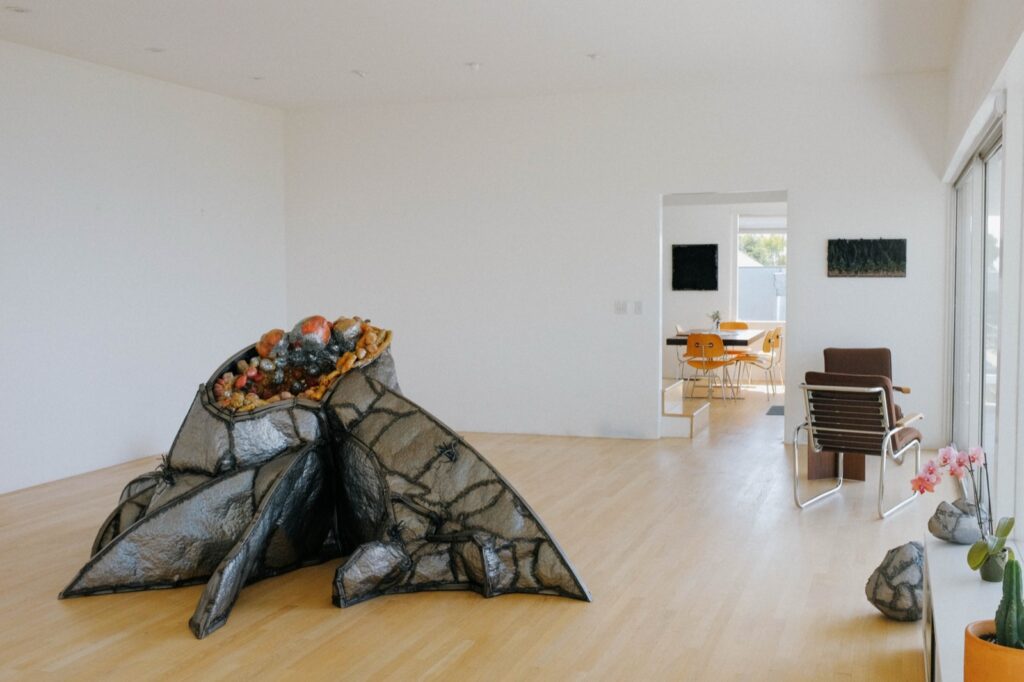
An art installation and exhibition by renowned artist Rita McBride during Frieze Los Angeles 2026, in collaboration with Okey Dokey Konrad Fischer & Del Vaz Projects — the final artistic intervention before the restoration of Neutra’s original design began.
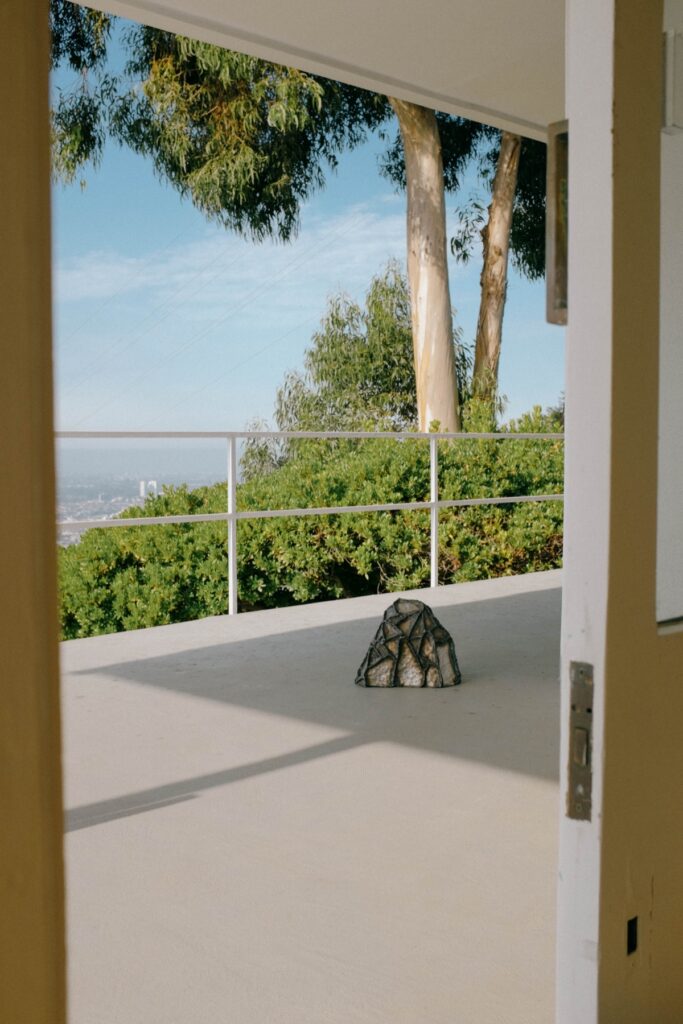
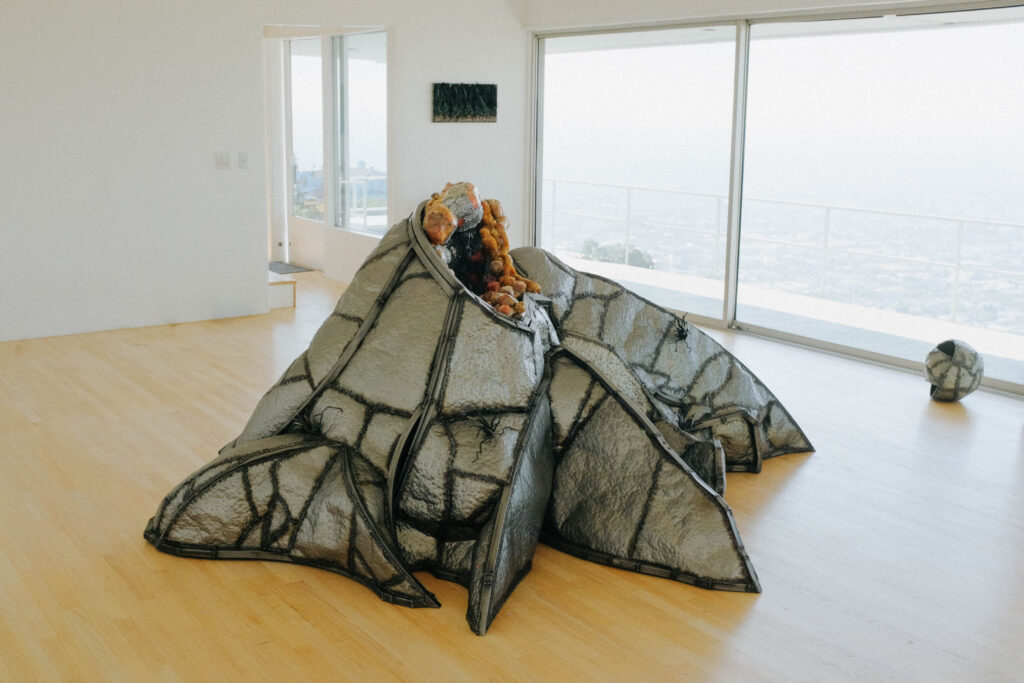
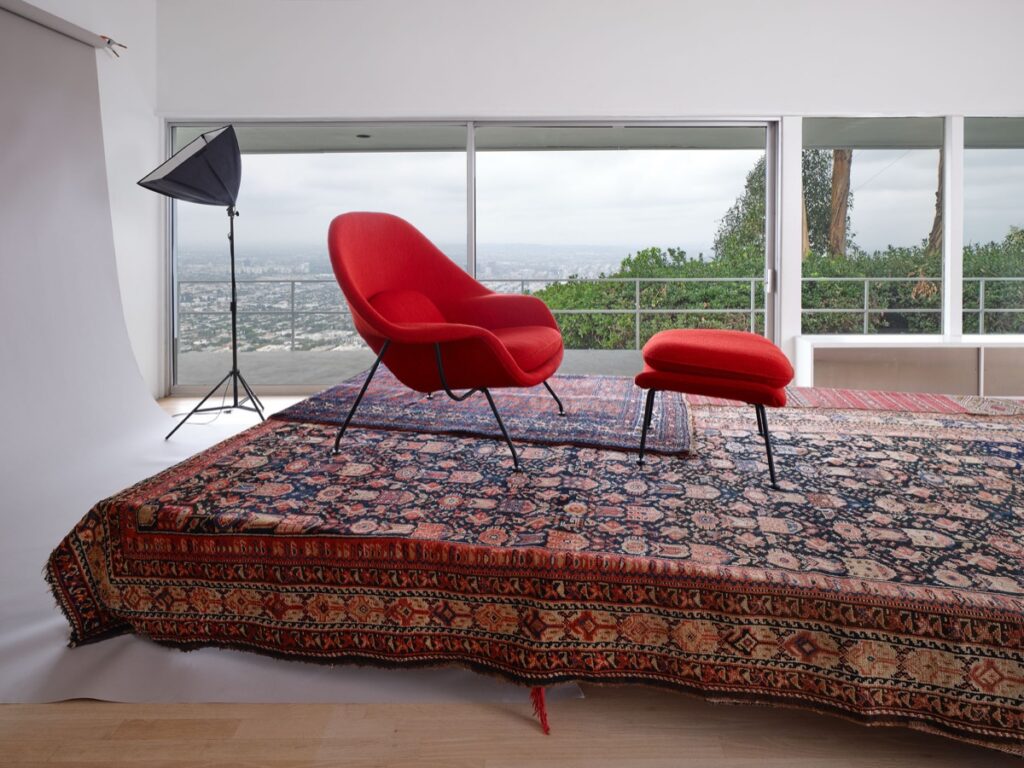
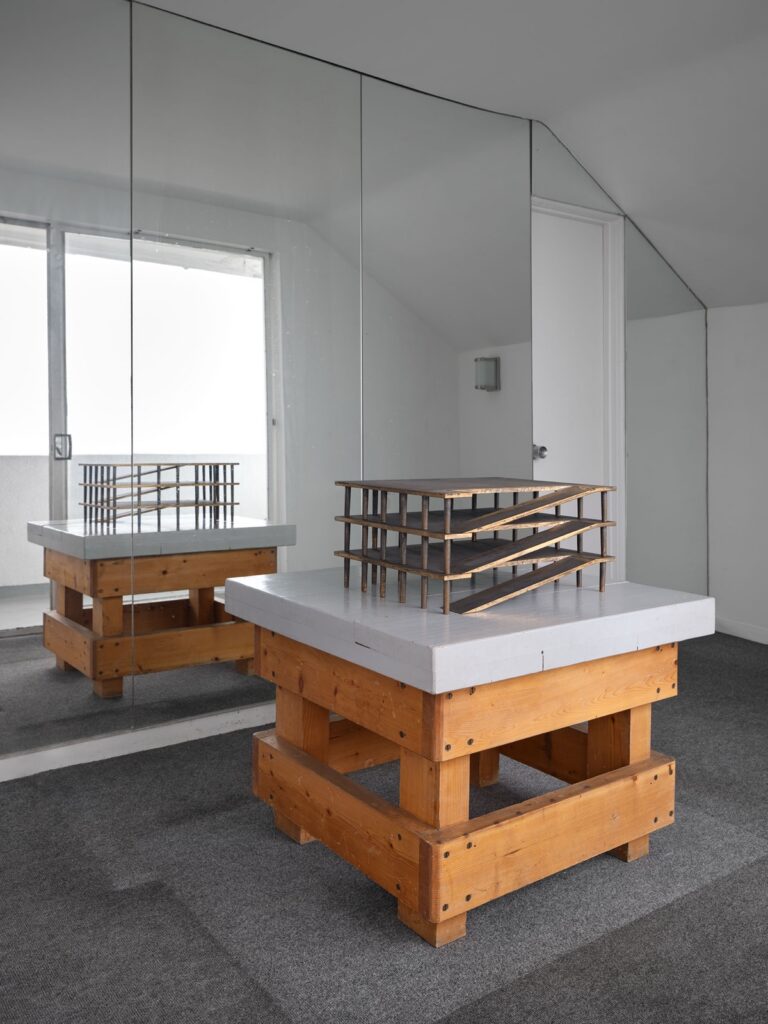
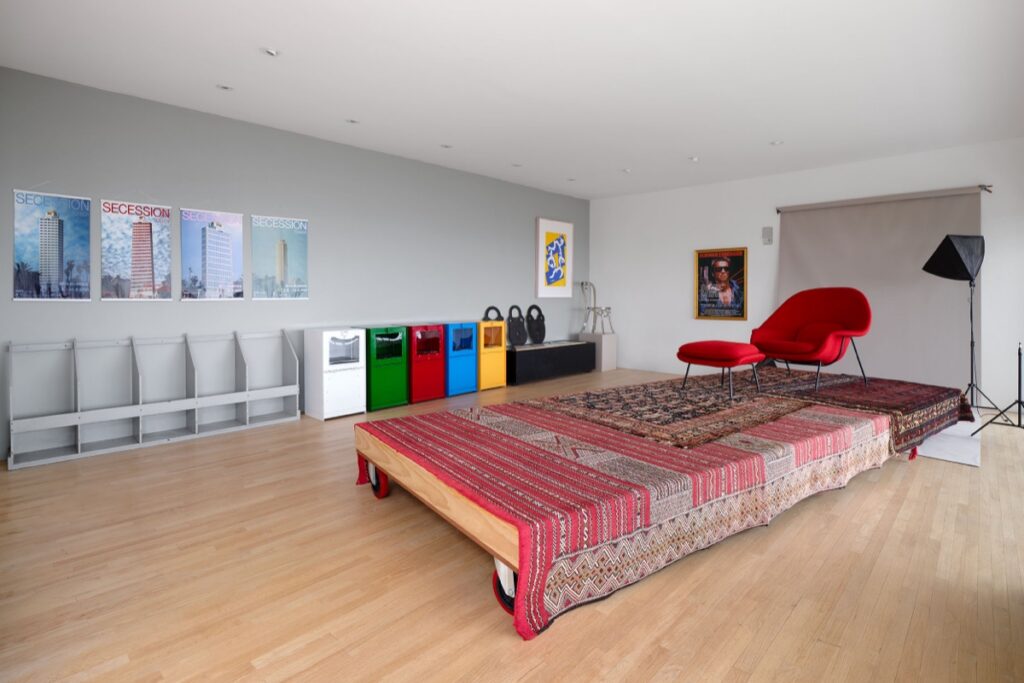
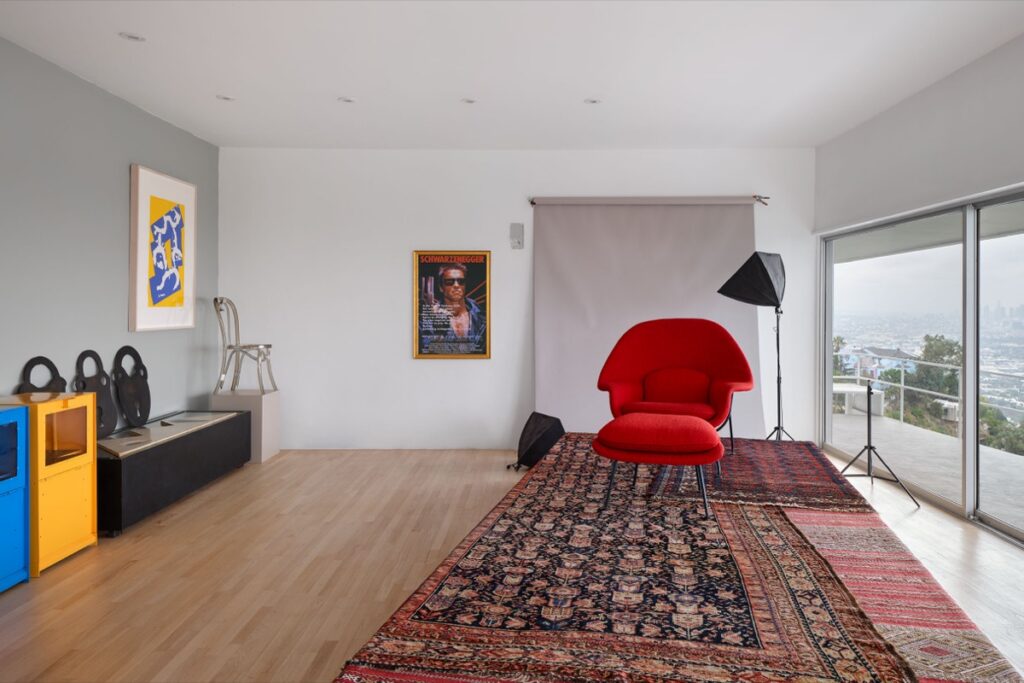
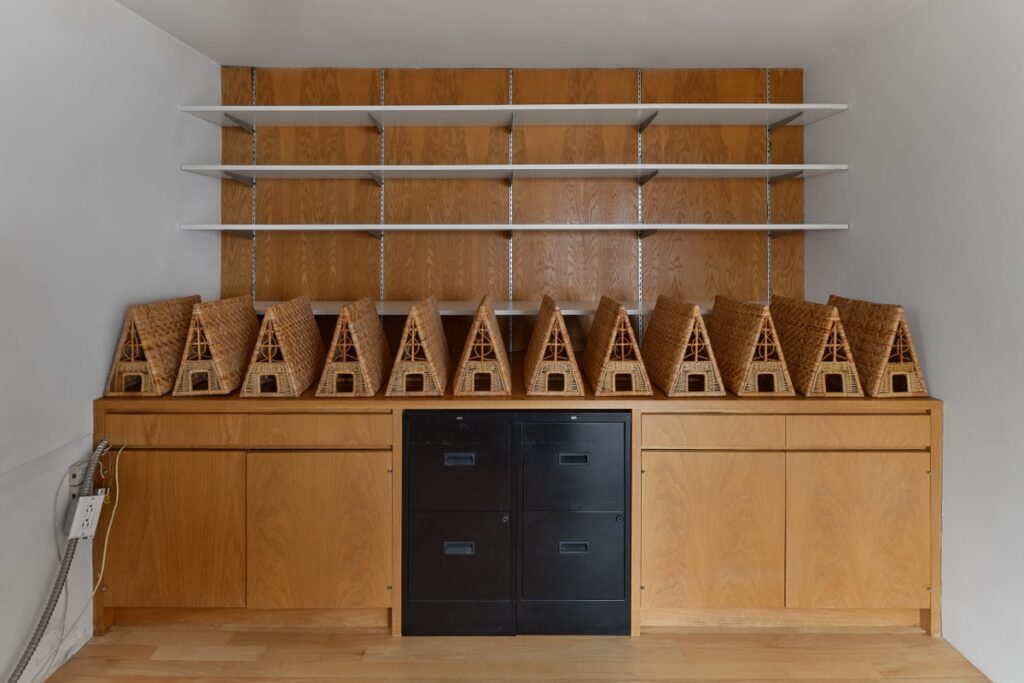
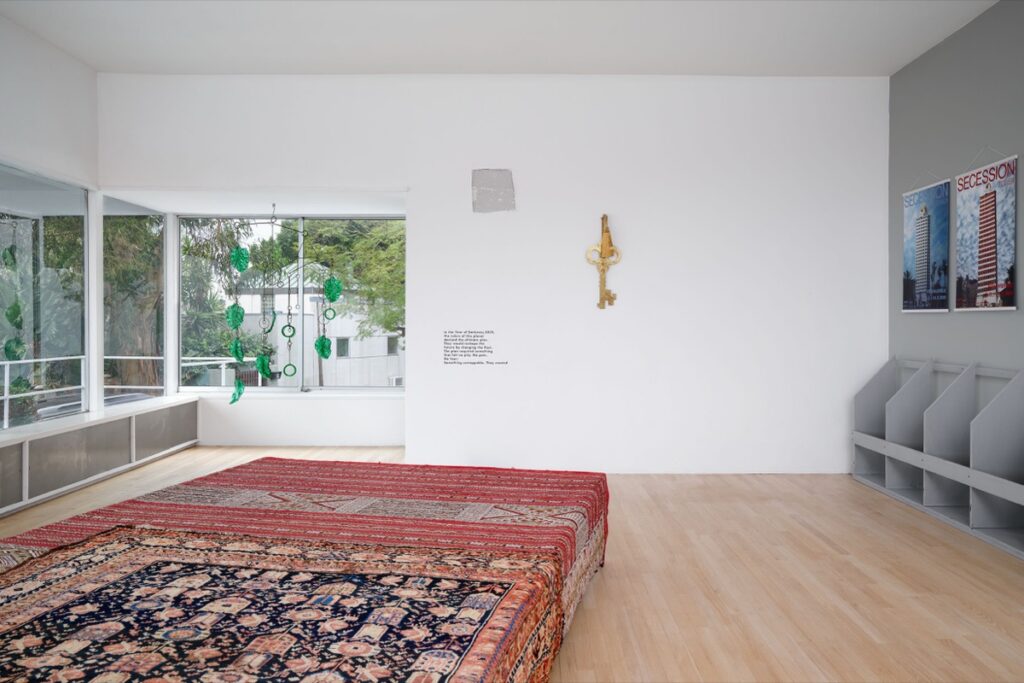
Presented by Del Vaz Projects, OKEY DOKEY KONRAD FISCHER, and Blue Heights Arts & Culture, “wunderkammer” was an installation by artist Rita McBride at the Galka Scheyer House during FRIEZE Art Fair 2026. “wunderkammer” began with McBride clearing space in her studio to create a singular, novel artwork. The circumstance of this rearrangement results in an amalgamation of past and in-process works hung and placed randomly. Situated similarly in this domestic setting (without chronology, rhythm, or reason), McBride’s works—often engaging civic space, urban infrastructure, and industrial fabrication—mold into compartmental, eclectic fixtures. While every element originates from a specific point in the evolution of her practice, here, each piece functions as a neighbor—relevant in its immediate relation to the artwork that it surrounds and the architecture that surrounds it. Moving from one object to the next is kinetic rather than choreographed; there is potential for perpetual reordering.
“wunderkammer” marked the final artistic intervention at 1880 Blue Heights Drive before the restoration of Neutra’s original design commences. While this home reflects the twentieth-century ideals of biorealism—a functional place to live in nature—it is not emblematic of Neutra’s Case Study houses. This space was designed to address the particular needs/desires—some documented, some discovered—of an individual’s profession and lifestyle. “wunderkammer”’s contents contend with a palimpsest of contemporary renovations and reside amongst the house’s faded trace of Modernism. During the structure’s transitional phase, the artist’s freedoms are measured against the architect’s concerns: the future preservation of the past. McBride’s variable arrangements inspired a dance between artmaking and engineering—a negotiation of room for invention. Each work invoked the assessment of a bearing wall, the depth of a floorboard, and whether a stairwell is up to code. The installation (outdoors, indoors, and across various rooms) catalyzes a sequence of inquiries, limitations, and parameters—and their resulting possibilities.
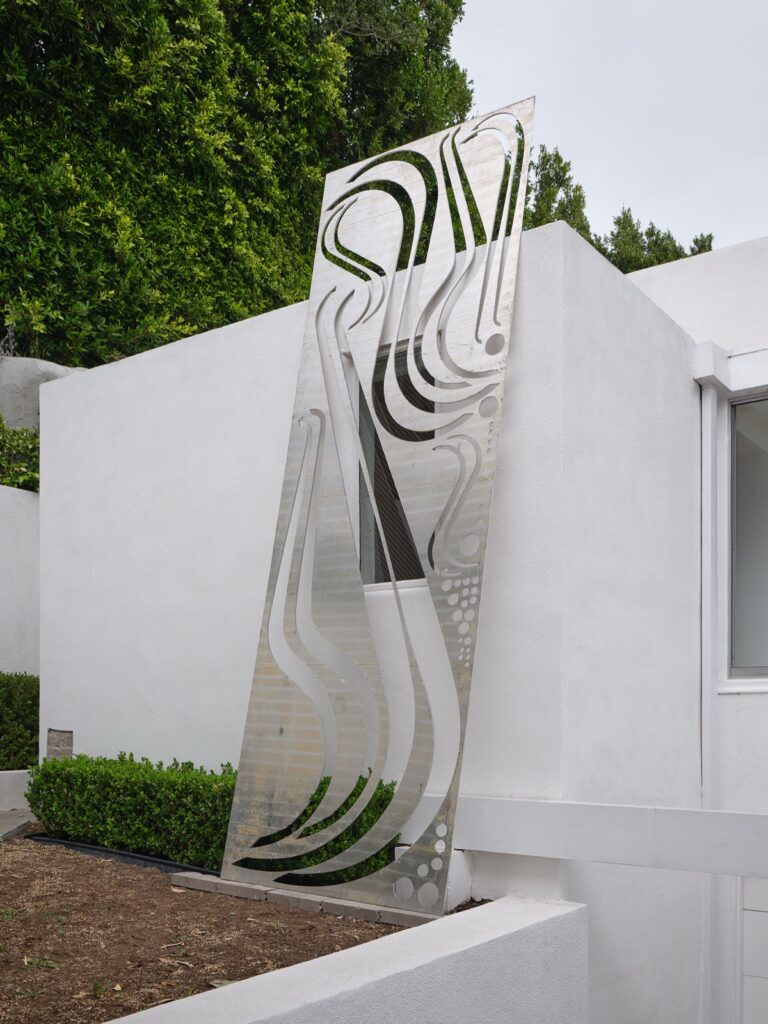
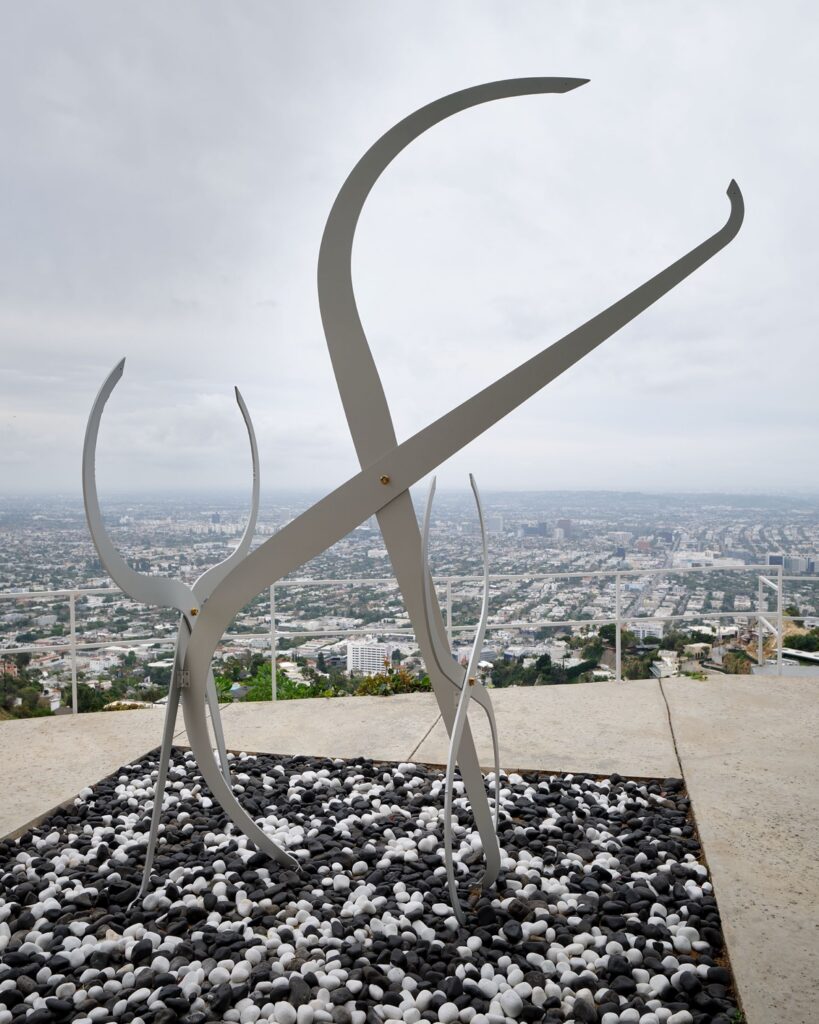
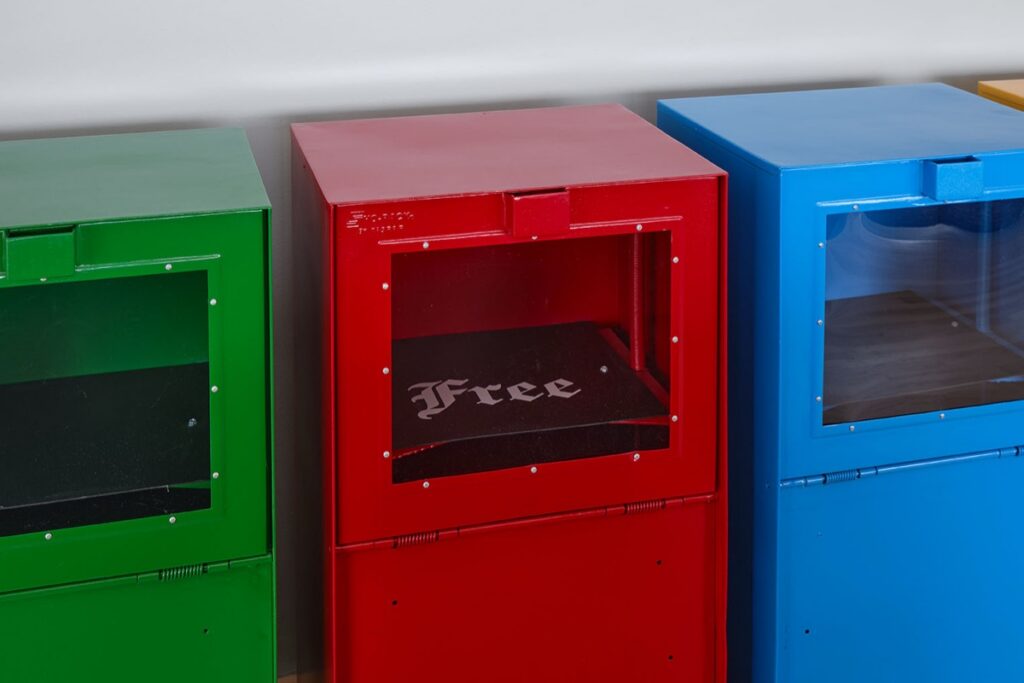
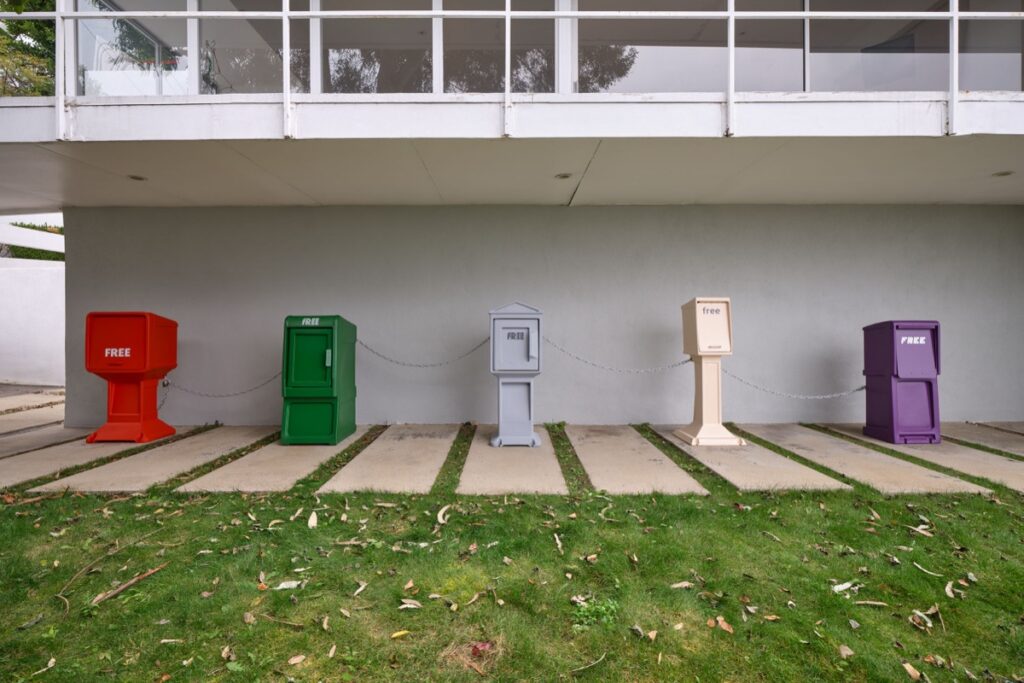
A caliper was erected at a colossal scale that transforms tool into spectacle; a mobile was constructed with Cosanti-wrought links and balanced with Murano-glass leaves; a promotional real-estate poster reimagined the Vienna Secession building as a luxury high-rise; a print was composed of a gestural, fax-warped reproduction of Le Corbusier’s designs for Algiers; highway ramps are coated with horizon-line hues and faded in the sun; silhouettes of gigantic keys and locks from around the world are cut out of brass sheets and patinaed; found newspaper dispensers were spray-painted into monochrome totems that house and disseminate free literature (such as this). Aspiring to precision, function, and idealism, Modernist architecture intrigues McBride with its inescapable complexities, failures, and humor. Her works test the extent to which the artist can approach democratic structures democratically, inviting both play and plan through actions of unlocking, tinkering, and reconfiguring. Like a body moving through space, these works orient rather than explain: implicit, visceral, and absurd.
Press
At the core of today’s LA art scene are two 1930s houses by Richard Neutra, by Giorgia Aprosio, domus. Read here.
Blue Heights Arts & Culture: A Los Angeles Sanctuary, by Angella D’Avignon and Benno Herz, FRIEZE Magazine. Read here.
During Frieze LA, Juliana Halpert Finds Some of the Best Art (and Gossip) in Unlikely Places, by Juliana Halpert, CulturedMagazine. Read here.
At the core of today’s LA art scene are two 1930s houses by Richard Neutra, by Giorgia Aprosio, domus. Read here.
Partners
Del Vaz Projects is a 501(c)(3) nonprofit art space based in Los Angeles, California, which was founded by Jay Ezra Nayssan in 2014. Forging collaborations across vast generations and geographies, Del Vaz Projects is a curatorial platform that produces on-site and off-site exhibitions that are free and accessible to the public; a research collective comprised of fellows and freelancers who pair cutting-edge scholarship with experimental authorship to craft insightful texts for Del Vaz Projects’ shows and publications; an independent press that designs, publishes, and distributes artist books and exhibition catalogs—featuring critical texts commissioned by contemporary writers and cultural innovators; and an artist production fund that secures fiscal and material resources through their extended community of collaborators in order to support underfunded artists as they pursue ambitious projects.
OKEY DOKEY KONRAD FISCHER is a new project for exhibitions and presentations by Konrad Fischer Galerie, which has been based in Düsseldorf since 1967 and Berlin since 2007. Beginning with a series of shows in Los Angeles, presenting historic artists alongside contemporary artists, the project now includes an office in New York’s Tribeca neighborhood, where there was a recent presentation of Bruce Nauman’s Office Edit #1 from 2001. When Konrad Fischer Galerie was first founded in a small room in Düsseldorf, Minimal and Conceptual art were almost unknown in Europe. This new project is synonymous with the gallery’s origins, concentrating on the essentials and a spirit of experimentation. The name of the project comes from a phrase Konrad Fischer frequently used, often ending conversations and letters with “Okey Dokey, Konrad Fischer.” Fischer was so well known for the saying that Sol LeWitt had a stamp with this inscription made especially for him, which now serves as the logo for the project.